

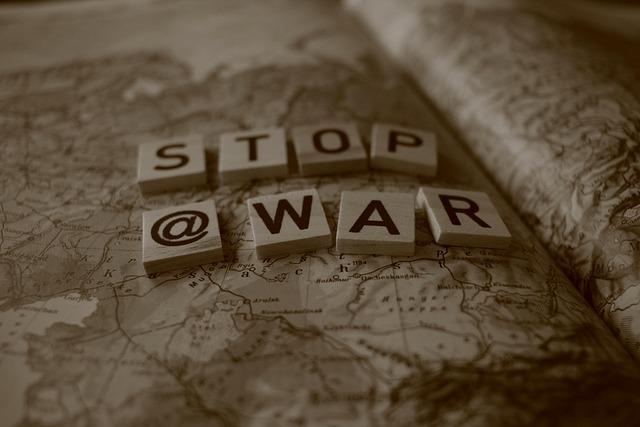
In the aftermath of World War II, the devastation left across continents posed an unprecedented challenge: how to rebuild not just cities and economies, but fractured societies. Central to this effort was a pioneering approach to education—one aimed at fostering peace and equipping children with the tools to heal divisions and prevent future conflicts. This article explores the origins and impact of postwar peace education initiatives, shedding light on the vital role schools played in shaping a more hopeful, cooperative world order. Through the lens of history and pedagogy, we examine how teaching peace became a cornerstone in rebuilding societies ravaged by war.
Education for Peace: Teaching Postwar Reconstruction to a New Generation
In the aftermath of World War II, educators faced the monumental task of preparing young minds not just to understand history, but to actively participate in the healing and rebuilding of fractured societies. Schools across Europe and beyond introduced curricula that emphasized the importance of peace, cooperation, and civic responsibility, aiming to foster a generation capable of transcending conflict. Lessons extended beyond textbooks, incorporating experiential learning that encouraged empathy and critical thinking about the causes and consequences of war. This educational vision centered on the belief that sustainable peace demands not only political agreements but also the transformation of societal attitudes and values from the ground up.
The approach was multidimensional, integrating diverse subjects to cultivate a holistic understanding of postwar challenges:
- History and Civics: Examining the rise and fall of regimes and the role of democracy in stabilizing societies.
- Ethics and Social Studies: Promoting respect for human rights and multicultural dialogue to counteract prejudice.
- Economics and Urban Planning: Teaching the fundamentals of rebuilding destroyed infrastructure and economies.
| Curriculum Focus | Purpose | Example Activity |
|---|---|---|
| History & Civics | Understanding causes of conflict | Debates on democratic values |
| Ethics & Social Studies | Fostering empathy and tolerance | Role-playing diverse community members |
| Economics & Urban Planning | Reconstruction strategies | Designing model postwar cities |
The Role of Curriculum in Fostering Social Cohesion and Resilience
In the aftermath of WWII, curriculum development took on an unprecedented role, shaping not just individual knowledge but the very fabric of fractured societies. Educational systems were reimagined to prioritize peacebuilding skills and nurture a collective identity rooted in mutual respect and shared humanity. Schools became arenas for cultivating empathy and understanding, emphasizing themes like conflict resolution, human rights, and democratic participation. This approach sought to empower young generations with the tools necessary to overcome sectarian divides and contribute to sustainable social resilience.
Key elements integrated into these curricula included:
- Critical thinking: Encouraging students to analyze propaganda and question divisive narratives.
- Collaborative learning: Activities designed to build teamwork across different cultural and ethnic backgrounds.
- Civic education: Fostering active citizenship to rebuild trust in institutions.
| Curriculum Focus | Resilience Outcome |
|---|---|
| Peace Education | Reduced intergroup tensions |
| Democratic Values | Enhanced civic engagement |
| Conflict Resolution | Improved social cooperation |
Empowering Children with Conflict Resolution and Critical Thinking Skills
Building a foundation for lasting peace begins in childhood, where young minds are equipped with essential tools to navigate conflicts and complex societal challenges. Teaching children conflict resolution encourages them to approach disputes with empathy, patience, and dialogue rather than aggression or avoidance. These early lessons empower children to become proactive peacebuilders, capable of understanding differing perspectives and working collaboratively toward constructive outcomes.
Critical thinking plays an equally vital role in shaping resilient societies. By fostering analytical skills and questioning mindsets, children learn to assess information judiciously and develop solutions rooted in reason and equity. Key elements embedded in this approach include:
- Active listening to understand all sides of an issue
- Problem-solving strategies that prioritize mutual benefit
- Ethical reasoning to uphold justice and human dignity
- Collaborative decision-making that values diversity
| Skill | Benefit for Children | Impact on Society |
|---|---|---|
| Conflict Resolution | Builds empathy | Reduces violence |
| Critical Thinking | Enhances judgment | Strengthens democracy |
| Collaborative Learning | Encourages teamwork | Fosters inclusion |
Recommendations for Integrating Peace Education into Modern School Systems
To effectively weave peace education into contemporary classrooms, it’s essential that curricula prioritize critical thinking and empathy development. These skills empower students to understand and respect diverse perspectives, thereby laying the foundation for peaceful coexistence. Schools should also incorporate experiential learning opportunities, such as conflict resolution workshops and community service projects, which allow students to practice constructive dialogue and collaboration firsthand.
Policy support and teacher training form the backbone of successful peace education integration. Administrators must provide educators with professional development programs focused on nonviolent communication, intercultural competence, and historical awareness of peace movements. Furthermore, collaboration between schools, families, and local peace organizations can create a nurturing ecosystem that sustains ongoing dialogue and reflection.
| Core Element | Recommended Approach |
|---|---|
| Curriculum Content | History of post-war reconciliation and global peace efforts |
| Skills Development | Empathy, mediation, and problem-solving exercises |
| Teacher Training | Workshops and resources on peace pedagogy |
| Community Engagement | Partnerships with peace organizations |
- Embed peace themes into subjects like literature, social studies, and arts.
- Encourage student-led initiatives that promote dialogue and social justice.
- Utilize digital platforms to connect classrooms across cultures.
In Summary
As the world continues to grapple with conflict and division, the lessons drawn from post-World War II education efforts remain profoundly relevant. Teaching children how to rebuild societies is not just a historical reflection, but a vital blueprint for fostering resilience, understanding, and peace in today’s fractured communities. By investing in education that prioritizes reconciliation and social cohesion, societies worldwide can better prepare younger generations to navigate and heal the wounds of conflict. The legacy of these post-war initiatives serves as a powerful reminder that peace is not merely the absence of war, but a continuous process nurtured through learning and collective commitment.

![USS Paul Ignatius (DDG 117) arrives in Toulon Naval Base, France [Image 5 of 6] – DVIDS](https://news-france.info/wp-content/uploads/2026/10/71258-uss-paul-ignatius-ddg-117-arrives-in-toulon-naval-base-france-image-5-of-6-dvids-450x253.jpg "USS Paul Ignatius (DDG 117) arrives in Toulon Naval Base, France [Image 5 of 6] – DVIDS")