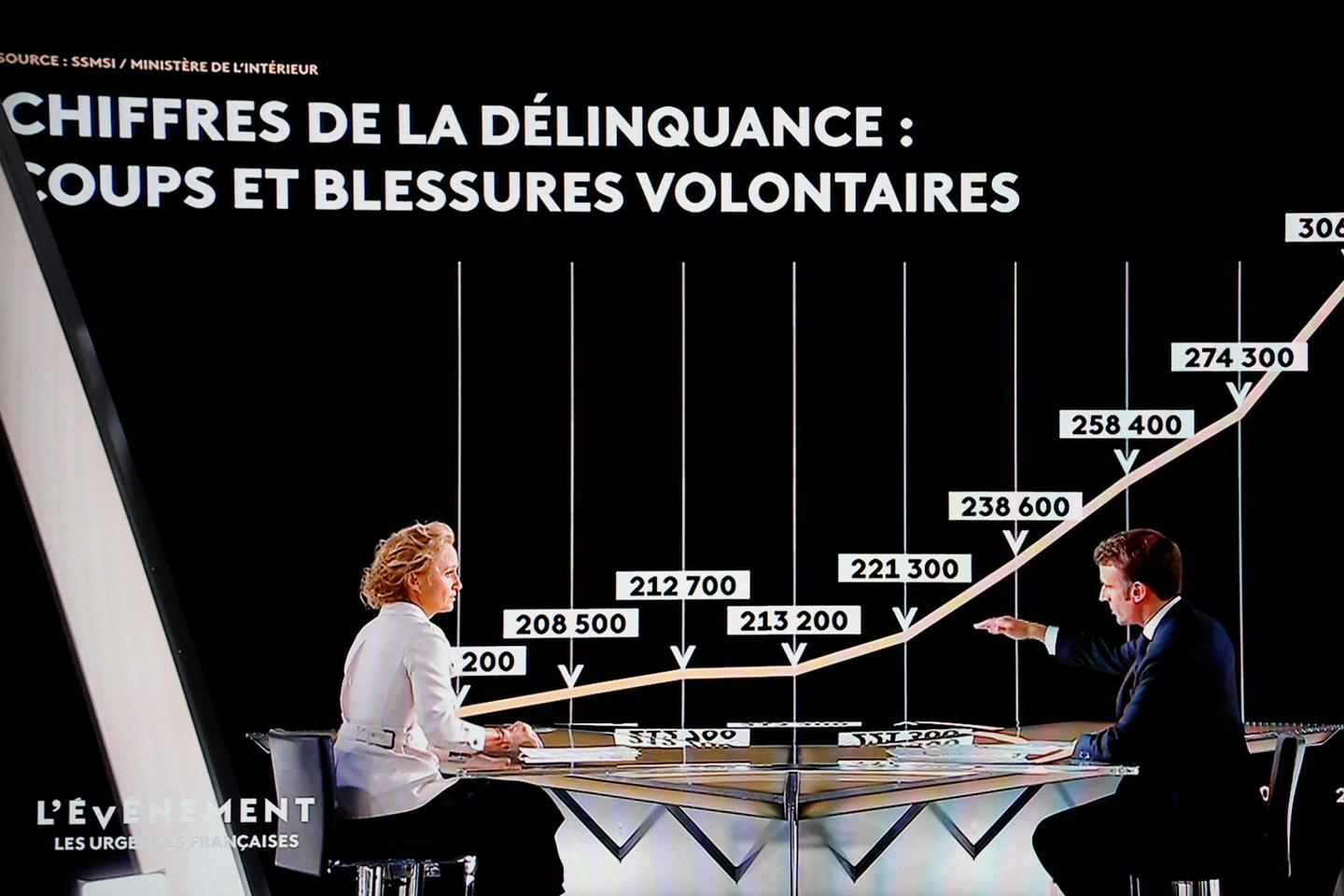
French President Emmanuel Macron recently ignited controversy with a claim that “at least half of the crime in Paris is committed by foreigners,” a statement that quickly grabbed headlines and sparked public debate. This assertion, reported by Le Monde.fr, raises critical questions about its origin, accuracy, and the data underpinning such a significant accusation. As France grapples with issues of immigration, integration, and security, understanding the context and evidence behind Macron’s claim is essential for an informed discussion on the state of crime and social dynamics in the French capital. This article delves into the sources and statistical basis referenced by the president, examining the broader implications of his remarks in today’s charged political landscape.
Origin and Context of Macron’s Crime Statistics Statement
French President Emmanuel Macron’s assertion that “at least half of Paris crime is committed by foreigners” sparked intense debate and scrutiny. This claim originated during a recent political speech in which he addressed concerns over urban security and immigration. To understand the context, it is critical to consider the official crime reports and statistical data made public by law enforcement agencies and statisticians. Macron’s statement was sourced from selective interpretations of these reports, focusing on certain categories of offenses and specific districts within Paris that exhibit higher crime rates linked to non-citizen suspects.
Analysts point out that the complexity of crime statistics is often oversimplified in political discourse. When evaluating such claims, one must consider variables such as:
- Definition of “foreigner” — whether it includes recent immigrants, asylum seekers, or long-term residents without citizenship.
- Crime categories analyzed — ranging from petty theft to violent offenses, each with different offender demographics.
- Geographical considerations — crime in specific neighborhoods versus city-wide statistics.
This nuanced approach reveals how selective framing of data can influence public perception and policymaking.
Analysis of Crime Data and Foreign National Involvement in Paris
President Macron’s assertion that “at least half of Paris crime is committed by foreigners” draws from official crime statistics that highlight the disproportionate involvement of foreign nationals in reported offenses within the city. Data from the Paris Prefecture of Police reveals that individuals without French nationality are implicated in approximately 50-55% of recorded crimes, a figure that has attracted significant public and political attention. However, experts emphasize that this statistic must be contextualized: it includes a broad spectrum of infractions, from minor thefts to more serious violent crimes, and does not differentiate between temporary residents, expatriates, or undocumented migrants.
Key findings from the latest data:
- Thefts and burglaries: Over 60% are attributed to foreigners, reflecting vulnerabilities in urban districts with high transient populations.
- Violent crimes: Approximately 45% involve foreign nationals, a lower but still notable proportion.
- Drug-related offenses: Foreigners constitute nearly 70% of those apprehended, underscoring their prominent role in Paris’ narcotics market.
| Type of Crime | % Involvement by Foreign Nationals | Comments |
|---|---|---|
| Theft & Burglary | 60% | Concentrated in tourist areas and outer districts |
| Violent Crime | 45% | Includes street violence and assaults |
| Drug Offenses | 70% | Linked to trafficking hotspots in Paris suburbs |
While these numbers have formed the basis of political discourse, criminologists argue that socioeconomic factors such as poverty, urban exclusion, and lack of integration services heavily influence crime rates among foreign populations. Furthermore, the legal status of individuals—whether they are asylum seekers, students, or undocumented migrants—plays a critical role in their representation in crime statistics. Thus, a nuanced interpretation is essential to avoid stigmatization and develop effective crime prevention policies.
Evaluating the Political and Social Implications of the Claim
The statement attributed to President Macron ignites intense political debate and social friction, reflecting deep divides in public opinion and policy approaches concerning immigration and security. The assertion that “at least half of Paris crime is committed by foreigners” risks reinforcing stereotypes that could exacerbate xenophobia and social exclusion. Political opponents and human rights organizations alike caution that such claims, if unsubstantiated or taken out of context, may serve not only as a populist rallying cry but also undermine social cohesion by stigmatizing immigrant communities.
From a sociopolitical perspective, this discourse influences legislative priorities and public funding strategies. Consider the following key implications:
- Policy Shifts: Potential tightening of immigration controls and expansion of police powers.
- Public Perception: Heightened fear or mistrust towards foreigners, impacting community relations.
- Media Framing: The role of news outlets in either amplifying or critically examining such claims.
| Aspect | Potential Impact | Stakeholders |
|---|---|---|
| Law Enforcement | Increased scrutiny on immigrant populations | Police, Immigrants |
| Public Policy | Tougher immigration laws proposed | Government, Political Parties |
| Social Cohesion | Risk of increased community tensions | Civil Society, Residents |
Recommendations for Policy and Community Engagement to Address Crime Concerns
Addressing the concerns linked to crime statistics requires a multifaceted approach that combines sound policy measures with proactive community involvement. Policymakers must prioritize enhancing data transparency and accuracy to avoid misinterpretations that can fuel social divisions. This involves:
- Implementing comprehensive crime data audits to ensure figures reflect reality, aiding informed decision-making.
- Encouraging cross-sector collaboration between law enforcement agencies, immigration authorities, and social services to tackle root causes rather than symptoms.
- Investing in crime prevention programs focusing on education, employment, and social inclusion to reduce vulnerabilities within immigrant communities.
Community engagement plays a critical role in fostering trust and cooperation between residents and local authorities. Strong partnerships can dispel myths and create a more unified response to crime, with an emphasis on dialogue and shared responsibility. Key strategies include:
- Establishing community liaison panels that include diverse voices to discuss ongoing safety concerns and co-create solutions.
- Launching awareness campaigns aimed at debunking stereotypes while promoting positive societal contributions of immigrants.
- Facilitating transparent communication channels between police and communities to build confidence and encourage reporting of crimes.
Wrapping Up
In conclusion, while President Macron’s assertion that at least half of crimes in Paris are committed by foreigners has sparked significant debate, a detailed examination of available data reveals a more nuanced reality. Official statistics and expert analyses suggest that attributing crime rates solely to nationality oversimplifies complex social and economic factors at play. As discussions around immigration and public safety continue to shape policy and public opinion, it remains crucial to rely on comprehensive evidence and avoid generalizations that risk fueling division. The ongoing dialogue will undoubtedly influence both France’s approach to law enforcement and its broader social cohesion initiatives.