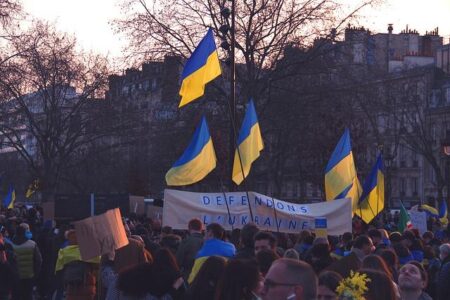
Thousands took to the streets of Lyon following the tragic killing of far-right activist Quentin Deranque, igniting a wave of protests that have reverberated across France. The march, which drew a diverse crowd from various political backgrounds, reflects a growing national concern about political violence and its implications for democracy. As participants voiced their outrage and solidarity, the atmosphere remained charged with tension, underscoring the divisive nature of Deranque’s activism and the broader implications of his death. In this article, we delve into the events leading up to the march, the reactions it has sparked, and what this means for the political landscape in France.
Thousands Rally in Lyon to Honor Far-Right Activist Quentin Deranque
In a show of solidarity, thousands gathered in the streets of Lyon to honor the late Quentin Deranque, a controversial figure within the far-right movement. Marked by a heavy police presence, the atmosphere oscillated between mourning and defiance, as demonstrators carried placards and banners emblazoned with messages that underscored their commitment to his cause. Speakers at the rally emphasized themes of freedom of speech and national identity, calling for unity among supporters. The event attracted not only local residents but also activists from across the nation, amplifying calls for attention to what they perceive as rising threats to their movement.
Despite the tensions surrounding Deranque’s legacy, supporters were eager to convey their message without incident. Organizers outlined key objectives for their gathering, aiming to safeguard their political stance while advocating for increased dialogue on contentious issues. The following points highlighted their main concerns:
- Protection of free speech: Advocating against censorship of far-right ideologies.
- National sovereignty: Emphasizing the importance of local governance and cultural preservation.
- Combatting extremism: Acknowledging the need for dialogue while distancing themselves from violent actions.
As the event concluded, some attendees expressed a renewed determination to engage in the political landscape, despite the violent circumstances that had brought them together. Others reflected on the need for introspection within their ranks, recognizing the complexity of their movement in a rapidly changing socio-political climate.
Exploring the Underlying Tensions in France’s Political Landscape
In the wake of the tragic killing of far-right activist Quentin Deranque, thousands flocked to the streets of Lyon, a demonstration underscoring the growing rifts within France’s political sphere. Activists and supporters from various factions gathered, expressing a kaleidoscope of emotions ranging from grief to outrage. The event has further polarized an already tense landscape, where issues of identity, nationalism, and extremism intersect. Key themes resonating throughout the march included:
- Resurgence of Far-Right Sentiments: The incident has galvanized supporters of far-right ideologies, highlighting the potential for increased radicalization.
- Public Safety Concerns: Many marchers voiced fears about rising violence in political discourse and its implications for everyday safety.
- Government Accountability: Critics are calling for increased scrutiny of state responses to extremist actions on both sides of the spectrum.
As France grapples with these complex dynamics, the reactions from political leaders have been mixed, revealing further undercurrents of discord. A recent poll highlights shifts in public opinion, indicating a growing divide on various political fronts:
| Political Group | Support Before Incident | Support After Incident |
|---|---|---|
| Far-Right Parties | 24% | 31% |
| Center-Right Parties | 40% | 37% |
| Left-Wing Parties | 23% | 21% |
This shifting sentiment is indicative of broader social tensions, as debates surrounding immigration, law enforcement, and national identity intensify. As the nation continues to navigate these turbulent waters, the future of France’s political landscape remains uncertain.
Calls for Unity and Dialogue Amidst Growing Polarization
The recent events in Lyon, following the tragic death of far-right activist Quentin Deranque, have sparked a wave of emotions across diverse segments of society. Thousands gathered to express their outrage and solidarity, emphasizing a collective call for unity and understanding in an increasingly fractured political landscape. The demonstrations served not only as a tribute to the late activist but also as a poignant reminder of the dangerous consequences of political extremism and polarization. Participants highlighted the need to engage in open dialogue to bridge the divides that are widening among communities.
Many speakers at the march urged for a reconsideration of communication and cooperation between differing ideologies. They stressed that constructive engagement is vital in addressing the root causes of division. Key points raised during the event included:
- Encouraging open conversations between factions to demystify misconceptions.
- Promoting education about different political philosophies to foster empathy.
- Creating platforms where people can express their views safely and respectfully.
Such initiatives could pave the way for a more harmonious society, fostering an environment where differing opinions are not only heard but appreciated.
Recommendations for Addressing Extremism and Fostering Social Cohesion
In light of recent events surrounding the death of far-right activist Quentin Deranque, it is crucial to implement strategies that promote understanding and tolerance among diverse groups. Education plays a pivotal role in dismantling extremist ideologies. Community-based programs aimed at enlightening citizens about the dangers of radicalism and the importance of social diversity can foster a safer environment. Additionally, encouraging dialogue between differing political and social factions can facilitate a shared understanding, reducing prejudice and suspicion.
Furthermore, strengthening community centers as safe hubs for interaction can encourage collaboration and coexistence. By providing platforms for marginalized voices to be heard, these centers can counteract the rhetoric of extremism. It’s also vital to engage local leaders in crafting inclusive policies that ensure all community members feel valued and represented. The integration of restorative justice practices may help address conflicts, paving the way for healing and reconciliation across social divides.
| Strategy | Objective |
|---|---|
| Educational Programs | To dismantle extremist ideologies |
| Facilitated Dialogues | To promote understanding |
| Community Centers | To create safe interaction spaces |
| Inclusive Policies | To ensure all voices are heard |
| Restorative Justice | To address conflicts constructively |
The Conclusion
In the aftermath of Quentin Deranque’s tragic death, the streets of Lyon have become a focal point for both mourning and political expression. Thousands gathered to voice their concerns, highlighting the growing tensions surrounding far-right ideologies and societal division in France. As demonstrators called for unity and reflection, the impact of this event resonates beyond the local community, igniting discussions on extremism, safety, and the future of political discourse in the nation. The legacy of Deranque continues to stir controversy, leaving many to question the implications of his activism and the rise of far-right movements. As the situation unfolds, Lyon stands as a testament to the complexities of contemporary politics, demanding attention and action in an increasingly polarized world.