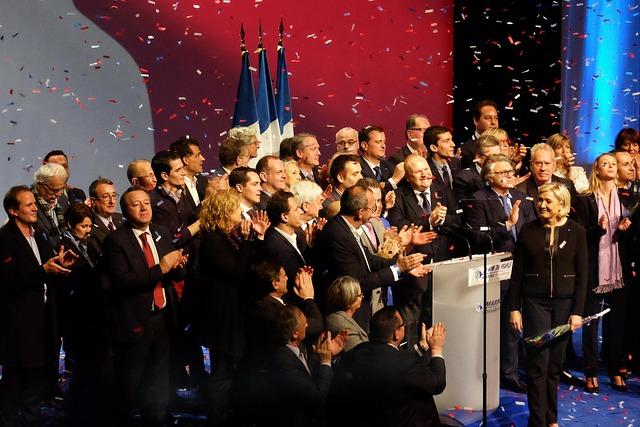
As France gears up for the pivotal 2027 presidential election, President Emmanuel Macron is advocating for a broad coalition aimed at uniting centrist and leftist forces to counter the rising threats posed by far-right leader Marine Le Pen and leftist populist Jean-Luc Mélenchon. In a climate increasingly polarized by political extremism, Macron’s call for collaboration represents a strategic pivot designed to solidify support and foster stability within France’s fragmented political landscape. With key issues like economic recovery, immigration, and national security taking center stage, the upcoming election promises to be a defining moment for the future of French democracy. This article delves into Macron’s coalition strategy, the implications for France’s political parties, and what this means for voters as the election draws near.
Macron Advocates for a Broad Coalition Ahead of 2027 Elections
In a strategic move to bolster his position ahead of the 2027 presidential elections, Emmanuel Macron is actively calling for the formation of a broad coalition among centrist and left-leaning parties. As he aims to neutralize the rising influence of rivals like Marine Le Pen and Jean-Luc Mélenchon, Macron emphasizes the need for unity in order to ensure stability and continuation of his political agenda. This appeal reflects a growing concern within centrist circles about the fragmentation of the left and the potential resurgence of far-right sentiments in France.
Macron’s proposed coalition focuses on several key objectives:
- Defending Democratic Values – A collective front against populism and extremism.
- Innovation and Economic Growth – Joint efforts to promote sustainable development and job creation.
- Social Equity – Addressing inequalities to unify diverse voter bases.
During a recent address, the President articulated his vision for a collaborative future, underscoring that only through partnership can the progressive forces in France prevail. By fostering dialogue and compromise, Macron hopes to lay the groundwork for a formidable alliance capable of countering the polarizing narratives that have become increasingly prevalent in French politics.
Strategies to Counter the Rise of Le Pen and Mélenchon
In the face of a potential resurgence of political figures like Marine Le Pen and Jean-Luc Mélenchon, President Macron underscores the necessity for a broad coalition spanning across different ideological spectrums. The creation of a united front is essential not only to galvanize support but also to articulate a compelling alternative to the populist narratives offered by the far-right and the far-left. This coalition must focus on key issues resonating with the electorate, including economic stability, social justice, and national security, ensuring that the voices of moderates and progressives are unified.
To successfully mobilize this coalition, Macron advocates for strategies that promote collaboration and dialogue among various parties. This includes:
- Strengthening grassroots movements to engage local communities
- Fostering public debates that prioritize reasoned discourse over divisive rhetoric
- Formulating policy proposals that address the core concerns of citizens, such as employment and public services
Incorporating these elements will be critical in countering the appeal of Le Pen and Mélenchon, allowing the coalition to present a cohesive vision that not only counters populism but also reinvigorates trust in traditional political institutions.
Implications of a United Front for France’s Political Landscape
The suggestion for a broad coalition in response to the rising popularity of Marine Le Pen and Jean-Luc Mélenchon reflects a critical moment in France’s political narrative. As Macron calls for unity among centrist and leftist parties, the dynamics of the electoral landscape are poised to shift significantly. Concerns over extremism are pushing unlikely allies to the negotiating table, emphasizing the necessity of mutual concessions to present a formidable counterforce. Parties traditionally at odds may find common ground, fostering a centrist resurgence that champions stability amid growing polarization. This coalition could reframe political discourse, centering issues of economic viability and social cohesion rather than divisive rhetoric.
However, the formation of a united front doesn’t come without its challenges. Potential implications include:
- The possibility of diluted platforms and ideologies, as disparate groups attempt to forge consensus.
- The risk of alienating voters who feel that their specific interests may be overlooked in favor of broader electoral strategies.
- Challenges in maintaining unity after the elections, particularly if the coalition wins and must govern with varied priorities and viewpoints.
To illustrate the stakes involved, consider the following table showcasing electoral trends and potential coalition outcomes:
| Party | 2022 Election Result (%) | 2027 Coalition Potential |
|---|---|---|
| La République En Marche! | 27.8% | High |
| Parti Socialiste | 1.7% | Medium |
| Europe Écologie Les Verts | 4.6% | Medium |
| La France Insoumise | 21.95% | High |
| Rassemblement National | 41.5% | Low |
Voter Engagement and Coalition Building as Key Priorities
The upcoming 2027 French presidential election presents a critical moment for political actors seeking to counter the rising tides of extremism embodied by figures like Marine Le Pen and Jean-Luc Mélenchon. President Macron’s call for a wide coalition is not merely strategic; it reflects a broader recognition of the intersectionality of contemporary political issues. Engaging voters from diverse backgrounds is essential, as it creates a more inclusive political atmosphere where all voices can be heard. Key strategies for enhancing voter engagement include:
- Targeted Outreach: Initiatives aimed at underrepresented demographics to ensure that their concerns are integrated into the political discourse.
- Collaborative Platforms: Creating spaces where different political factions can discuss shared goals, rather than focusing solely on ideological differences.
- Grassroots Mobilization: Empowering local communities through initiatives that inspire change and increased participation in the electoral process.
Coalition building stands as the backbone of Macron’s strategy, aiming to unify disparate groups under a common progressive agenda. To illustrate the power of such collaborations, recent polling data suggests that voter sentiment is shifting in favor of alliances that cross traditional party lines. Below is a simplified overview of potential coalition strengths based on current voter preferences:
| Coalition Partner | Potential Voter Support (%) |
|---|---|
| Centrist Parties | 38 |
| Leftist Groups | 27 |
| Green Movement | 15 |
| Progressive Independents | 20 |
In light of these dynamics, successful engagement and coalition building could prove transformative, positioning Macron’s faction as a formidable opponent to the populist wave threatening to reshape French politics. Each step toward collaboration not only strengthens the political landscape but also establishes a broader, more engaged electorate—a decisive factor in the quest for stability and progress in the years to come.
Future Outlook
In conclusion, as the 2027 French presidential election approaches, President Emmanuel Macron’s call for a broad coalition underscores the urgency of unifying progressive forces to counter the rising threats posed by far-right candidate Marine Le Pen and leftist rival Jean-Luc Mélenchon. This approach not only reflects the evolving landscape of French politics but also highlights the pivotal role that collaborative governance will play in safeguarding democratic ideals. As parties navigate their alliances and strategies in the coming months, the implications of Macron’s recommendations will undoubtedly shape the electoral battleground and the future of France itself. The stakes are high, and the actions taken now could determine the direction of the nation for years to come.