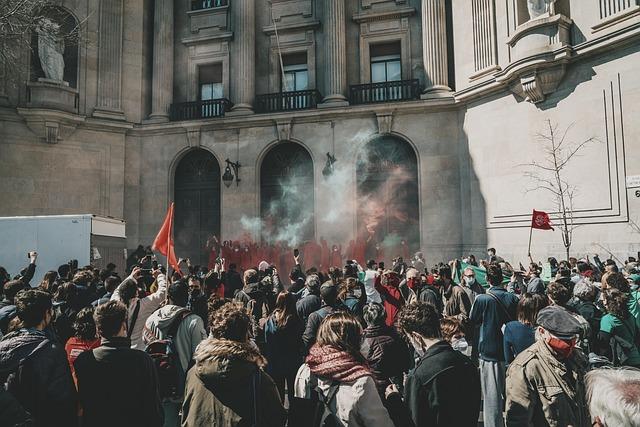
Protesters across France and Spain have taken to the streets in growing numbers, expressing deep frustration with what they see as government failures on key social and economic issues. Far from rejecting government intervention outright, these demonstrators are calling for stronger and more effective public policies to address inequality, inflation, and public service deficits. The unrest highlights a paradoxical demand: citizens seeking expanded government action as a remedy for systemic problems they feel have been neglected or mismanaged. This wave of protests underscores the complex relationship between governance and public expectations in two of Europe’s largest economies.
Protests in France and Spain Reveal Deep Frustration Over Economic Policies
Across major cities in France and Spain, thousands have taken to the streets, voicing a potent mix of anger and frustration. Citizens blame recent government policies for widening economic inequality, rising inflation, and stagnating wages that have eroded their quality of life. Protesters aren’t just criticizing the status quo—they are demanding significant policy shifts, calling for expanded social safety nets, greater public investment, and proactive measures to protect workers and families from economic hardship.
Despite differing national contexts, the core grievances share notable similarities. Demonstrators in both countries highlight the following key points:
- Growing distrust toward austerity measures considered ineffective and unfair.
- Demand for more government intervention in housing, healthcare, and education.
- Opposition against labor market reforms perceived as favoring corporations over employees.
| Country | Key Demand | Recent Policy Highlight |
|---|---|---|
| France | Increased minimum wage | Labor law reforms |
| Spain | Expanded unemployment benefits | Tax cuts for corporations |
Demands for Increased Government Intervention Grow Amid Rising Social Inequality
In recent weeks, mass demonstrations across France and Spain have spotlighted growing public impatience with the widening gap between the rich and the poor. Protesters are holding governments accountable for what they perceive as inadequate action to curb socio-economic disparities that have intensified in the wake of economic downturns and pandemic fallout. Calls for robust policy measures echo strongly—from demands for increased social welfare funding to the implementation of progressive taxation frameworks aimed at redistributing wealth more effectively.
Key demands highlighted by demonstrators include:
- Expansion of affordable housing programs to combat homelessness
- Stronger labor protections including living wage legislation
- Greater investment in public healthcare systems
- Reforms to taxation ensuring higher contributions from top earners
| Country | Gini Index (Inequality Measure) | Recent Policy Initiatives |
|---|---|---|
| France | 32.4 | Minimum wage hike, Rent control |
| Spain | 34.7 | Increased unemployment benefits, Tax reforms |
Analyzing the Political Response and Potential Policy Shifts in Madrid and Paris
Governments in both Madrid and Paris find themselves on the defensive, as widespread protests have highlighted deep dissatisfaction with perceived policy failures. Officials in Spain are grappling with mounting pressure to address labor market inflexibilities and social inequality through more expansive welfare measures. Meanwhile, France’s leadership is contending with public outcry over pension reforms and economic stagnation. These protests underscore a growing expectation among citizens for stronger state intervention, as calls for increased public spending and social protections gain momentum across both capitals.
Key areas under political scrutiny include:
- Labor policy reforms aimed at enhancing job security and worker rights
- Expansion of social safety nets to reduce income disparity
- Strategies to counter inflation and rising living costs
- Investment in public services such as healthcare and education
| City | Policy Focus | Political Response |
|---|---|---|
| Madrid | Labor reforms & Welfare expansion | Introducing subsidy packages & dialogue with unions |
| Paris | Pension system overhaul & Economic relief | Postponement of pension reforms & targeted tax cuts |
Recommendations for Balancing Public Demands with Sustainable Economic Reform
Governments facing growing public unrest must carefully navigate the fine line between addressing immediate demands and implementing long-term economic reforms that ensure sustainability. Transparent dialogue with citizens is essential, allowing for a clear explanation of the constraints and potential impacts of policy decisions. Incorporating public input through innovative tools such as digital town halls and participatory budgeting can enhance trust and offer a direct channel for feedback, reducing the disconnect between policymakers and protesters.
Additionally, policymakers should prioritize reforms that align fiscal responsibility with social equity. This includes:
- Gradual tax restructuring to reduce burdens on lower-income groups while ensuring adequate revenue for public services
- Investment in green technologies and infrastructure to foster job creation and environmental sustainability
- Reform of labor laws to balance competitiveness with workers’ rights
| Policy Area | Short-Term Action | Long-Term Impact |
|---|---|---|
| Taxation | Temporary subsidies for essentials | Balanced fiscal growth |
| Labor Market | Enhanced worker protections | Flexible, fair employment |
| Environment | Green stimulus programs | Resilient, sustainable economy |
Closing Remarks
As protests continue to sweep across France and Spain, the complex interplay between public discontent and demands for stronger government intervention underscores the challenges faced by policymakers. Citizens frustrated with perceived governmental failures are simultaneously calling for more comprehensive solutions, highlighting a growing tension in the social contract. How European governments respond to these demands in the coming months will be critical in shaping the political and economic landscape of the region.