Introduction:
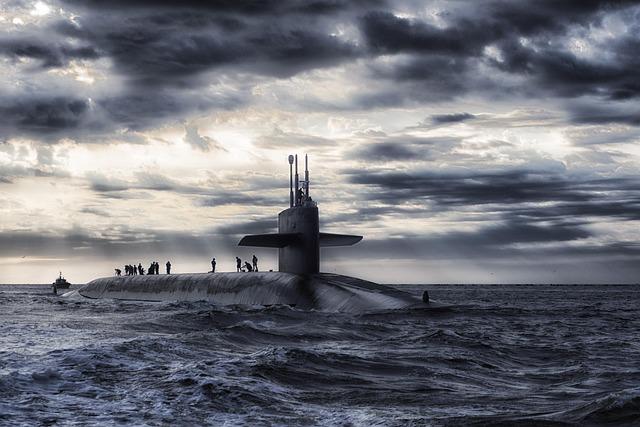
In a remarkable discovery that has captured the attention of historians and naval enthusiasts alike, French authorities announced the recovery of a submarine that had been lost for half a century off the coast of Toulon. The submarine, which vanished in mysterious circumstances during a training mission in 1973, represents a significant chapter in France’s maritime history. The retrieval operation not only sheds light on the vessel’s fate but also reflects advances in underwater search technology. As experts analyze the findings, questions surrounding the circumstances of its disappearance remain at the forefront of public interest. This article delves into the details of the discovery, its historical context, and the implications for maritime safety and underwater exploration.
French Submarine Discovery Marks Historic Maritime Milestone
The recent discovery of a French submarine, missing for half a century, has captivated maritime enthusiasts and historians alike. Located off the coast of Toulon, this historic vessel has been the subject of various theories and speculations since it vanished without a trace. Experts believe that the submarine, now a time capsule of naval technology and history, could provide invaluable insights into the conditions of underwater ecosystems over the decades as well as the technological advances made in submarine design.
To commemorate this significant find, a series of investigations will be launched, focusing on aspects such as:
- Preservation Techniques: Exploring methods to safeguard the submarine’s structure and contents.
- Environmental Impact: Assessing how the submarine’s materials interact with marine life.
- Historical Context: Investigating the events leading to its disappearance and its role in naval history.
| Key Dates | Event |
|---|---|
| 1973 | Submarine reported missing |
| 2023 | Submarine discovered off Toulon coast |
Technological Innovations Aid in Submarine Recovery Efforts
Recent advancements in technology have revolutionized the way divers and recovery teams locate and retrieve sunken vessels, exemplified by the remarkable discovery of a French submarine off the coast of Toulon after nearly five decades. Modern underwater drones equipped with high-resolution imaging and sonar capabilities have made it possible to survey large ocean areas more efficiently. These innovations allow for deeper exploration and more accurate mapping of the seabed, which is crucial when searching for vessels lost in the vast and often treacherous marine environments. Essential tools, including advanced robotics and artificial intelligence, have significantly enhanced recovery strategies, enabling teams to operate in environments that were previously deemed inaccessible.
The integration of data analytics has further streamlined salvage operations, allowing experts to analyze historical data and predict the most likely locations for submerged artifacts. The following technological innovations have played pivotal roles in submarine recovery efforts:
- Autonomous Underwater Vehicles (AUVs): Capable of conducting detailed surveys without direct human intervention.
- 3D Sonar Imaging: Provides detailed visualizations of underwater terrain and structures.
- Remote Operated Vehicles (ROVs): Allows for hands-on manipulation of objects at great depths, delivering real-time video feedback.
- Machine Learning Algorithms: Predictive capabilities based on historical wreck data enhance search precision.
Utilizing these innovations not only improves the chances of locating sunken vessels but also ensures the safety of personnel involved in recovery missions, showcasing the invaluable intersection between technology and maritime archaeology.
Implications for Naval History and Underwater Exploration
The discovery of the long-lost French submarine off the coast of Toulon after a span of 50 years profoundly impacts our understanding of naval history and sheds light on the technological advancements in underwater exploration. Unearthed mysteries surrounding the vessel’s fate are likely to reignite interest in submarine warfare history, particularly in the context of the Cold War era. Researchers and historians will now have access to artifacts and documentation that may reveal valuable insights into the operational strategies employed by submarines during critical geopolitical tensions, enhancing our understanding of maritime security dynamics.
Furthermore, this find underscores the importance of underwater exploration technologies that have evolved significantly over the past half-century. The methods utilized for locating the submarine exemplify advancements in mapping and sonar technologies, which can be applied in various fields from marine biology to underwater archaeology. As a result, we anticipate increased investment in the following areas:
- Enhanced underwater drones equipped with improved sensors.
- Global collaborations in marine exploration initiatives.
- Innovative preservation techniques for historical undersea sites.
Recommendations for Preserving and Analyzing the Submarine Site
To ensure the effective preservation and analysis of the recently discovered submarine site, a coordinated approach is vital. Marine archaeologists, paired with conservationists, should employ a series of advanced technologies. This may include:
- Underwater drones for detailed site surveys
- 3D imaging to document the site’s current condition
- Environmental monitoring to assess underwater conditions
Additionally, collaboration with local authorities and communities is essential for creating a sustainable management plan. Stakeholder engagement can facilitate the following strategies:
- Educational programs to raise public awareness
- Guidelines for visitation to minimize disturbance
- Regular maintenance of the site to prevent degradation
| Strategy | Purpose |
|---|---|
| Underwater Drones | Detail-oriented surveys |
| 3D Imaging | Preservation documentation |
| Community Programs | Public engagement |
The Conclusion
In conclusion, the discovery of the French submarine off the coast of Toulon marks a significant milestone in maritime history and a poignant reminder of the sacrifices made by those who serve in the armed forces. After nearly five decades underwater, this find not only provides closure to the families of the crew lost in 1973 but also opens new avenues for research into submarine technology and naval history. As investigations continue, experts are hopeful that the insights gained will enhance our understanding of underwater operations and the challenges faced by submariners. The French Navy, along with historians and technologists, will undoubtedly draw on this momentous event to advance future maritime endeavors, ensuring that the legacy of the submarine and its crew is honored and remembered for generations to come.