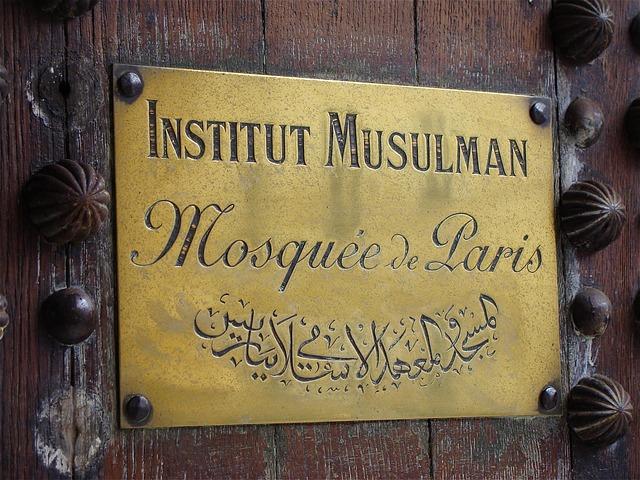
In a time marked by intense debates over identity, secularism, and integration, the relationship between France and its Muslim population remains a central and contentious issue. As the nation grapples with questions of multiculturalism and social cohesion, revisiting the insights of Albert Camus offers a nuanced perspective on today’s challenges. This article explores what the renowned French philosopher and writer might say about the current discourse, shedding light on historical tensions and envisioning pathways toward mutual understanding.
France’s Complex Relationship with Its Muslim Population Explored
France’s interaction with its Muslim population remains a tangled narrative of integration, secularism, and identity politics. Since the postcolonial era, Muslim communities in France have been both integral to the nation’s socio-economic fabric and subjects of fierce cultural debates. Issues of religious expression, such as the wearing of the hijab or the building of mosques, often become flashpoints in broader discussions about laïcité — the French principle of state secularism. These controversies reveal not only tensions within governmental policies but also the divergent public perceptions that shape daily realities for many Muslim citizens.
Analyzing statistical insights offers a clearer perspective on the socio-economic challenges faced by these communities:
| Indicator | Muslim Population | General Population |
|---|---|---|
| Unemployment Rate | 15.8% | 8.3% |
| Higher Education Enrollment | 22% | 38% |
| Poverty Risk | 30% | 14% |
These disparities illuminate the need for nuanced policies that foster equal opportunity without compromising France’s secular ideals. At the same time, public discourse often oscillates between calls for greater inclusivity and fears surrounding national identity shifts. Understanding this dynamic requires looking beyond headlines to the lived experiences of millions, whose aspirations and frustrations reflect a complex interplay of faith, citizenship, and belonging.
- Challenges: Discrimination, social marginalization, and educational barriers
- Opportunities: Youth engagement, interfaith dialogue, and policy reform
- Future outlook: Balancing secular values with cultural diversity
Albert Camus’ Views on Identity and Belonging in Contemporary France
Albert Camus, a towering figure in French literature and philosophy, would likely approach the contemporary debates around identity and belonging with a nuanced perspective rooted in his existential and humanist beliefs. In his works, Camus emphasized the absurdity of the human condition and the importance of confronting alienation with dignity and solidarity. He would probably argue that the struggle of Muslims in France today mirrors the struggles he described in post-war France: a quest to reconcile personal identity with societal expectations—a balance between individual freedom and collective responsibility. Camus’ vision transcended mere tolerance; he insisted on active engagement and the recognition of common humanity, values that remain deeply relevant in addressing the fractures within modern French society.
In practical terms, Camus might advocate for policies and social attitudes that foster inclusivity without erasing cultural distinctiveness. His philosophy would encourage the acknowledgment of diversity as an enriching dimension of national identity rather than as a threat. The challenges of integration, discrimination, and cultural tension could be reframed through his lens as part of a larger call to awaken civic empathy and shared purpose. Consider this comparative overview of Camus-inspired themes and contemporary social dynamics:
| Camus’ Principle | Contemporary Context | Potential Impact |
|---|---|---|
| Revolt against injustice | Addressing systemic discrimination against Muslims | Empowerment and social cohesion |
| Unity in diversity | Celebration of multicultural French identity | Reduced alienation and mutual respect |
| Recognition of absurdity | Understanding cultural tensions without oversimplification | Promotes dialogue over division |
- Embracing complexity: Camus encourages confronting difficult realities candidly.
- Shared humanity over labels: His work focuses on common human experiences.
- Engagement over apathy: Advocates for active citizenship as a means of belonging.
Challenges Facing French Secularism and Religious Freedom Today
France’s commitment to laïcité, a principle that enshrines strict separation of religion and state, faces unprecedented tensions today. The rise of Islamic visibility—whether through religious dress, halal food debates, or public prayer—challenges traditional notions of neutrality in public spaces. This has sparked contentious legislative measures such as the ban on conspicuous religious symbols in schools and recent proposals targeting religious separatism. Critics argue these measures may disproportionately impact Muslim communities, igniting debates over the balance between preserving secularism and safeguarding religious rights.
Additionally, the intersection of secular policies and rising Islamophobia complicates efforts to protect freedom of worship. Key challenges include:
- Discrimination in housing and employment against Muslim citizens
- Heightened surveillance of Muslim populations in the name of counter-terrorism
- Social stigmatization fueled by media and political rhetoric
These factors contribute to a climate where religious freedom is paradoxically both defended and restricted. John Rawls’ idea of overlapping consensus seems elusive as society wrestles with pluralism within the framework of a rigidly secular state.
| Aspect | Impact on French Secularism | Impact on Religious Freedom |
|---|---|---|
| Legislation | Reinforces strict public neutrality | Limits visible religious expression |
| Public Perception | Increases polarization | Heightens fear and mistrust |
| Security Measures | Justifies increased monitoring | Creates suspicion toward Muslim practices |
Policy Recommendations for Bridging Divides and Fostering Integration
To dismantle the persistent barriers between communities, policymakers must embrace a strategy grounded in mutual respect and equitable opportunity. Educational reforms are paramount, advocating curricula that not only acknowledge but celebrate cultural diversity, enabling young citizens to develop a nuanced understanding of their shared national identity. Equally vital is the promotion of fair employment practices that open doors for marginalized populations, fostering economic inclusion and stability.
Effective integration also hinges on comprehensive urban planning coupled with inclusive civic engagement initiatives. Creating public spaces that encourage intercultural dialogue can transform neighborhoods from sites of segregation into hubs of connection. The following table summarizes key recommendations that reflect this holistic approach:
| Focus Area | Key Action | Expected Impact |
|---|---|---|
| Education | Integrate multicultural narratives | Strengthened social cohesion |
| Employment | Enforce anti-discrimination laws | Greater economic inclusion |
| Urban Development | Design inclusive public spaces | Enhanced intercultural interaction |
| Civic Engagement | Promote community-led initiatives | Empowered minority voices |
Key Takeaways
In navigating the complex relationship between France and its Muslim population, reflecting on Albert Camus’s humanistic philosophy offers valuable perspective. As France continues to grapple with issues of identity, secularism, and social cohesion, Camus’s emphasis on empathy, justice, and the absurdity of division serves as a timely reminder of the need for dialogue and understanding. While challenges remain, embracing these principles could pave the way for a more inclusive and unified society.