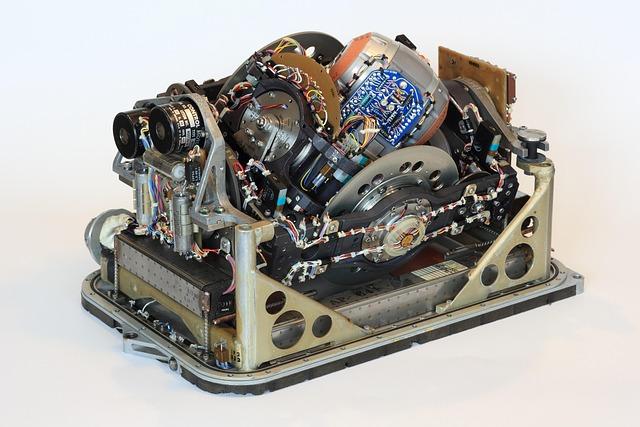
French defense technology leader Safran has clinched key contracts to supply advanced inertial navigation systems for France’s nuclear deterrence forces, underscoring the company’s strategic role in national security. The deals, announced this week, will equip naval assets tasked with maintaining the country’s second-strike capability, enhancing the precision and reliability of missile guidance amidst evolving geopolitical challenges. This development marks a critical step in the ongoing modernization of France’s nuclear arsenal, reaffirming Safran’s position at the forefront of defense innovation.
Safran Advances Inertial Navigation Systems for Enhanced Nuclear Deterrence
Safran has cemented its role as a critical supplier for France’s strategic defense capabilities by securing pivotal contracts aimed at upgrading the inertial navigation systems (INS) utilized in the country’s nuclear deterrence forces. These contracts focus on developing next-generation INS technology that promises unparalleled accuracy and reliability under extreme operational conditions, vital for the strategic submarines and ballistic missile systems that underpin France’s national security doctrine. Leveraging cutting-edge innovations in gyroscope and accelerometer design, Safran’s enhancements are set to improve navigational precision, ensuring secure and autonomous mission execution even in GPS-denied environments.
The INS modernization project encompasses several key innovations designed to bolster France’s deterrent strength:
- Advanced Cold Atom Sensors: Increasing sensitivity and reducing drift for prolonged underwater missions.
- Ruggedized Design: Enhanced durability to sustain performance under shock, vibration, and temperature extremes.
- Improved Data Fusion Techniques: Integrating multiple sensor inputs for seamless trajectory computation and navigation accuracy.
These improvements will enable improved positioning and guidance for submarine-launched ballistic missiles (SLBMs), thereby maintaining the strategic advantage necessary for nuclear deterrence. Safran’s continued investment and technological leadership in inertial navigation underscore its commitment to supporting France’s long-term defense strategy.
| Key Features | Impact on Nuclear Deterrence |
|---|---|
| Cold Atom Sensor Integration | Enhanced mission duration and positional accuracy |
| High-Performance Gyroscopes | Reduced navigational drift, ensuring precise missile targeting |
| Robust Environmental Shielding | Operational reliability under harsh submarine conditions |
Strategic Importance of Inertial Navigation in French Naval Defense Capabilities
Inertial navigation systems (INS) serve as the backbone of France’s underwater nuclear deterrence strategy, offering unparalleled autonomy and resilience against external interference. For submarines navigating the vast and often hostile depths, reliance on satellite navigation is neither secure nor feasible. Safran’s advanced INS technology ensures that French ballistic missile submarines (SSBNs) maintain precise positioning and trajectory control, critical for the successful deployment of strategic assets in contested maritime environments. This capability guarantees uninterrupted submarine stealth and operational readiness, reinforcing France’s commitment to a credible nuclear deterrent.
The integration of these sophisticated inertial navigation systems provides several operational advantages:
- Enhanced Accuracy: Minimizes drift errors for extended submerged missions.
- Robustness: Immune to electronic warfare and GPS jamming attempts.
- Autonomy: Supports prolonged silent operations without surface detection risk.
These elements collectively empower French naval forces to maintain strategic superiority beneath the waves, ensuring continuous deterrence and safeguarding national security interests.
Technological Innovations Driving Safran’s Contract Success in Military Applications
Safran’s recent contract wins in the realm of inertial navigation systems are underpinned by cutting-edge technological advancements that underscore the company’s expertise in precision and resilience. Leveraging proprietary gyro technology and advanced inertial measurement units (IMUs), Safran has developed systems capable of maintaining unparalleled accuracy under extreme conditions. These innovations enable the French Navy’s nuclear deterrence platforms to navigate with absolute reliability, crucial for national security missions where any deviation could jeopardize operational success.
Key features that set Safran apart include:
- High resistance to electronic interference: Ensuring consistent performance in hostile electromagnetic environments.
- Miniaturization and integration: Allowing seamless installation with existing naval systems without compromising space or weight constraints.
- Real-time error correction algorithms: Enhancing long-term navigation accuracy without reliance on external signals.
| Technological Aspect | Operational Benefit |
|---|---|
| Fiber-Optic Gyroscopes | Improved precision and durability |
| Advanced Signal Processing | Reduced navigation drift |
| Thermal Stabilization | Consistent performance in temperature extremes |
Recommendations for Sustaining Competitive Edge in Defense Navigation Technologies
To maintain leadership in defense navigation technologies, continued investment in cutting-edge research and development is indispensable. Prioritizing advancements in inertial navigation systems (INS) that combine precision with resilience under extreme conditions ensures operational superiority. Integrating quantum sensing and artificial intelligence into these systems can enhance accuracy while reducing vulnerabilities to electronic warfare, thus securing strategic advantages for naval deterrence missions.
Equally critical is strengthening collaborative networks between defense contractors, government agencies, and academic institutions. Sharing expertise and resources facilitates rapid innovation cycles and robust testing protocols. Key focus areas include:
- Developing modular and scalable navigation components adaptable across multiple platforms
- Implementing cybersecurity frameworks tailored specifically for navigation systems
- Exploring alternative power sources to increase system endurance
- Enhancing software algorithms for real-time threat detection and adaptive response
| Focus Area | Strategic Benefit | Innovation Example |
|---|---|---|
| Quantum Navigation | Unrivaled positional accuracy | Atomic interferometry integration |
| AI-driven Systems | Adaptive threat response | Machine learning for anomaly detection |
| Cyber Resilience | Defense against hacking attempts | Encrypted navigation protocols |
| Power Efficiency | Extended mission duration | Energy harvesting from vibration |
To Wrap It Up
Safran’s recent contracts to supply inertial navigation systems for France’s nuclear deterrence submarines underscore the company’s pivotal role in bolstering national security capabilities. As France continues to modernize its strategic defense assets, these agreements highlight the ongoing investments in advanced technology essential for maintaining a credible and reliable nuclear deterrent. Safran’s expertise in navigation technology not only strengthens French naval operations but also reinforces the country’s commitment to safeguarding its sovereignty in an evolving geopolitical landscape.