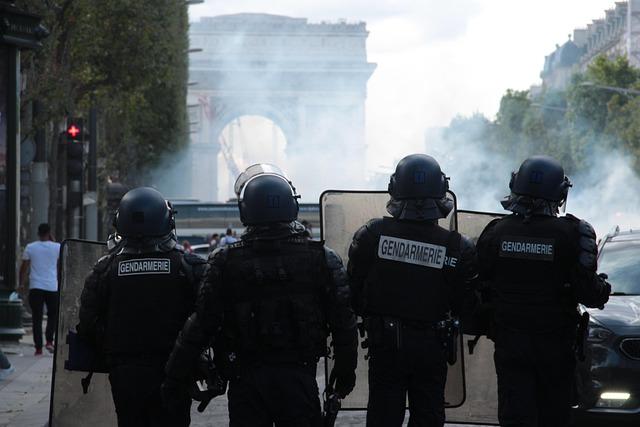
French authorities faced renewed unrest as police clashed with protesters across several cities, marking another day of escalating demonstrations nationwide. The confrontations underscore continuing tensions over recent government policies, with demonstrations drawing widespread attention and raising concerns about public order. This ongoing wave of civil unrest highlights deep-rooted divisions within France, as both officials and activists brace for further developments.
French Police Face Renewed Violence Amid Widespread Protests in Urban Centers
The latest wave of unrest has seen clashes erupt across multiple urban centers as demonstrators voice their discontent with recent government policies. French law enforcement officers have been met with intense opposition, resulting in a series of confrontations characterized by both peaceful protests and sporadic violence. The dynamics of the protests reflect a deeper societal division, with demonstrators demanding change while authorities strive to maintain public order amidst escalating tensions.
Key developments during these demonstrations include:
- Increased Police Deployment: Authorities have mobilized additional units equipped with riot gear to contain crowds in hotspots such as Paris, Lyon, and Marseille.
- Use of Crowd-Control Measures: Tear gas, water cannons, and arrests have been reported as means to disperse gatherings that turn violent.
- Community Impact: Public transportation interruptions and temporary closures of local businesses underscore the widespread disruption caused by the protests.
| City | Protester Count | Police Injuries | Arrests |
|---|---|---|---|
| Paris | 5,000+ | 12 | 45 |
| Lyon | 3,200 | 5 | 23 |
| Marseille | 2,800 | 8 | 30 |
Key Drivers Behind the Continuing Demonstrations and Public Unrest
At the heart of the recent upheavals are a combination of mounting economic pressures and growing discontent with governmental reforms. Citizens continue to express frustration over rising living costs, stagnant wages, and perceived inequalities exacerbated by recent austerity measures. These economic anxieties have been compounded by contentious pension reforms, which many view as disproportionately affecting working-class individuals. The government’s push to raise the retirement age has particularly inflamed tensions, sparking nationwide debates about social justice and the balance between fiscal responsibility and citizen welfare.
Additional factors fueling the unrest include:
- Youth unemployment: High rates have left many young people feeling marginalized and hopeless about their future prospects.
- Police conduct: Reports of excessive force during previous demonstrations have deepened public mistrust.
- Political polarization: A division between urban and rural populations regarding government policies further complicates peaceful negotiations.
| Factor | Impact | Public Sentiment |
|---|---|---|
| Economic Hardship | Widespread | Very High |
| Pension Reform | Nationwide | High |
| Youth Unemployment | Localized | Moderate |
| Police Actions | Targeted | High Distrust |
Impact on Daily Life and Government Response Strategies in Affected Cities
The clashes between French police and protesters have severely disrupted day-to-day activities in several urban centers. Public transportation services, including metro and bus lines, have faced multiple interruptions, causing widespread delays for commuters. Many local businesses, especially those located near protest hot spots, are grappling with closure orders or reduced hours to avoid property damage. Residents report increased police presence and barricades, transforming neighborhoods into tense environments where normal routines are halted.
The French government has deployed a multi-pronged approach to manage the unrest and restore normalcy. Key strategies include:
- Heightened police patrols: Reinforcement of law enforcement units in key districts to quickly respond to flare-ups.
- Curfew considerations: Discussions around imposing localized curfews to restrict nighttime gatherings.
- Community engagement: Initiating dialogue with protest leaders to address core grievances and negotiate peaceful resolutions.
- Public information campaigns: Utilizing social media and local news outlets to update residents on safety measures and transport status.
| City | Protest Impact | Government Action |
|---|---|---|
| Paris | Metro delays & shop closures | Increased police patrols & public advisories |
| Lyon | Road blockades & limited transport | Community talks with protest groups |
| Marseille | Business disruptions & public unrest | Curfew under consideration |
Expert Recommendations for De-escalation and Constructive Dialogue Between Authorities and Protesters
Amid rising tensions, specialists emphasize the importance of prioritizing communication strategies that foster trust and mutual understanding. Authorities are urged to engage in active listening, demonstrating a genuine commitment to addressing protesters’ core concerns without immediately resorting to force. Establishing dedicated liaison teams, composed of both community leaders and law enforcement representatives, can facilitate continuous dialogue and help preempt potential flashpoints during demonstrations.
Proven de-escalation tactics recommended include:
- Utilizing clear, calm, and non-provocative language during public addresses and interactions on the ground.
- Implementing phased response plans that prioritize non-violent methods over immediate crowd control measures.
- Creating safe zones where protesters can express themselves freely without fear of arrest or violence.
- Facilitating transparent communication channels to dispel misinformation and reduce confusion.
| De-escalation Element | Key Benefits |
|---|---|
| Active Listening | Builds trust; reduces misunderstandings |
| Liaison Teams | Continuous dialogue; faster conflict resolution |
| Safe Zones | Ensures protesters’ safety; lowers confrontation risk |
| Transparent Communication | Limits rumors; promotes public confidence |
To Wrap It Up
As demonstrations persist across French cities, clashes between police and protesters remain a significant concern, highlighting the ongoing tensions surrounding the issues at the heart of the unrest. Authorities continue to navigate the complex challenge of maintaining public order while addressing the grievances voiced by demonstrators. The situation remains fluid, with future developments likely to shape the political and social landscape in France in the coming weeks. CBS News will continue to monitor and report on these events as they unfold.