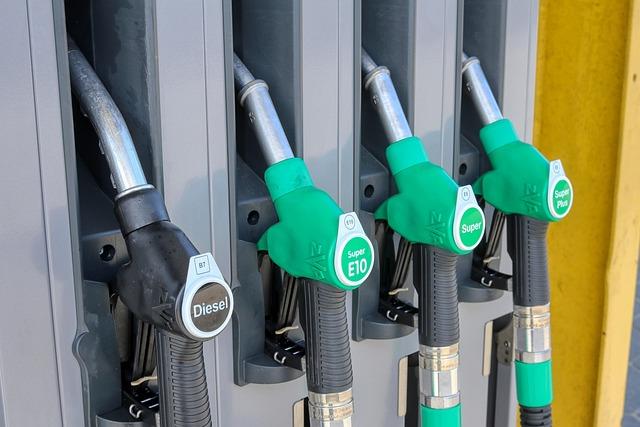
The French government has announced an expansion of its targeted fuel price relief measures in response to escalating energy costs impacting households and businesses across the country. As fuel prices continue to surge amid global market volatility, authorities in Paris are intensifying efforts to ease the financial burden on vulnerable consumers, signaling a strategic shift in fiscal support ahead of the summer travel period. This move underscores the government’s commitment to stabilizing living costs while balancing economic pressures on the broader French economy.
French Government Expands Fuel Price Relief Measures to Support Consumers
In a decisive move to alleviate the rising pressure on household budgets, the French government has broadened its fuel price relief initiatives, targeting lower-income consumers and essential service providers. The enhanced measures include an expanded fuel voucher program and a temporary freeze on specific fuel taxes, designed to ease the financial strain as global energy prices remain volatile. Officials stress that the approach ensures targeted support reaches those most affected while maintaining fiscal responsibility.
Key components of the updated relief measures include:
- Increased fuel vouchers: Expanded eligibility criteria allow more consumers to access subsidies at participating fuel stations.
- Tax reductions: A temporary suspension of part of the carbon tax for diesel and petrol fuels until the end of the quarter.
- Support for transport workers: Additional grants to offset fuel costs for public transport and delivery services.
| Measure | Benefit | Duration |
|---|---|---|
| Fuel Vouchers | Up to €30/month | 6 Months |
| Carbon Tax Freeze | Varies by fuel type | 3 Months |
| Transport Worker Grants | Flat €50/month | 6 Months |
Impact of Fuel Subsidies on the French Economy and Energy Market
Fuel subsidies have long been a strategic tool for the French government, aimed at cushioning consumers and businesses from volatile global oil prices. By scaling up targeted relief measures, authorities seek to mitigate the inflationary pressures that stem from rising fuel costs, which have a direct impact on transportation, agriculture, and manufacturing sectors. This approach not only helps preserve household purchasing power but also supports economic stability during periods of international energy market turbulence.
However, these subsidies come with notable economic trade-offs and environmental concerns. While short-term relief boosts consumption and reduces immediate hardships, it may inadvertently delay the transition to greener energy alternatives. Below is an overview of the key effects on the economy and energy market:
- Inflation Control: Reduced fuel prices alleviate cost-push inflation, benefiting end consumers and businesses.
- Energy Demand: Lower prices encourage sustained fossil fuel consumption, complicating climate targets.
- Government Budget: Increased fiscal pressure from subsidies can constrain public investments elsewhere.
- Market Distortions: Temporary subsidies may disrupt energy market signals needed for investment in renewables.
| Aspect | Short-Term Impact | Long-Term Concern |
|---|---|---|
| Consumer Prices | Reduced at the pump | Potential rebound after subsidy removal |
| Government Spending | Increased expenditure | Budget deficits risk |
| Energy Sector | Stable fossil fuel demand | Slower renewable adoption |
Analysis of Targeted Relief Strategies and Their Effectiveness
The French government’s decision to enhance targeted fuel price relief measures has showcased significant strides in mitigating economic pressure on vulnerable households. By focusing subsidies on low-income earners and public transport users rather than broad-based cuts, the initiative aims to optimize the distribution of support where it is most needed. Early data indicates a noticeable decrease in monthly fuel expenditure for eligible groups, reflecting an improved capacity to cope with rising fuel costs without sacrificing essential mobility.
However, the effectiveness of these strategies also hinges on clear communication and administrative efficiency. Challenges remain, particularly in ensuring that relief reaches rural communities and small businesses, which often face higher fuel price volatility. Analysts point out that continuous monitoring, combined with adaptive policy frameworks, will be crucial for sustaining impact beyond the immediate crisis.
| Target Group | Relief Type | Estimated Savings (€ / month) | Coverage (%) |
|---|---|---|---|
| Low-income households | Fuel price cap & subsidies | 45 | 85 |
| Urban public transport users | Discounted passes | 30 | 70 |
| Small rural businesses | Targeted grants | 50 | 60 |
- Target precision: Enhanced by demographic and usage data.
- Cost efficiency: Limited budget waste compared to blanket subsidies.
- Implementation hurdles: Geographic disparities requiring further support.
Policy Recommendations for Sustainable Fuel Price Management in France
To ensure long-term affordability and environmental responsibility, the French government must adopt a multifaceted approach to fuel price management. Central to this strategy is expanding targeted subsidies that prioritize lower-income households and essential service providers, minimizing the financial burden while avoiding market distortions. Additionally, investing in transparent fuel pricing mechanisms can help consumers better understand price fluctuations, promoting trust and enabling more informed decisions.
Parallel to financial relief measures, diversifying France’s energy portfolio is crucial. Accelerating renewable energy investments and infrastructure, combined with incentivizing electric vehicle adoption, can gradually reduce dependency on traditional fuels. Policy makers should also consider implementing pricing frameworks that reflect the environmental costs of fossil fuel consumption, encouraging behavioral shifts without compromising economic stability.
- Targeted support: Focused relief for vulnerable groups
- Price transparency: Clear and timely fuel price updates
- Renewables expansion: Increased funding for green energy
- Incentives: Tax benefits for clean transportation
- Environmental pricing: Smart taxes to discourage excessive fuel use
| Recommendation | Expected Impact | Timeframe |
|---|---|---|
| Targeted Subsidies | Reduce cost burden on vulnerable populations | Short-term (1-2 years) |
| Fuel Price Transparency | Improve consumer confidence and market fairness | Immediate |
| Renewables Investment | Lower fossil fuel dependence | Medium to Long-term (3-10 years) |
| Incentives for EVs | Boost adoption of clean vehicles | Medium-term (2-5 years) |
| Environmental Pricing | Encourage sustainable consumption habits | Long-term (5+ years) |
Wrapping Up
As the French government intensifies its targeted fuel price relief measures, businesses and consumers alike will be watching closely to gauge the policy’s impact on inflation and economic stability. With energy costs remaining a critical challenge, these interventions aim to provide much-needed respite while balancing fiscal responsibility. Observers will be keen to see how effectively these measures support France’s broader economic recovery in the months ahead.