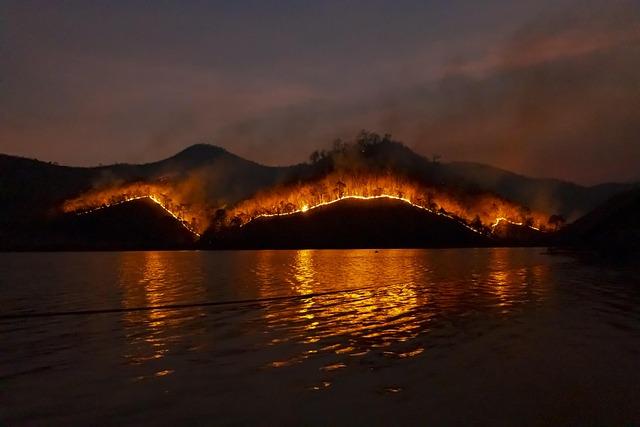
Massive wildfires raging through France’s southwestern Gironde region have forced authorities to order widespread evacuations, as flames continue to engulf thousands of hectares of forest and threaten residential areas. The intense blazes, fueled by prolonged dry conditions and strong winds, have prompted urgent responses from firefighting teams striving to contain the rapidly spreading fires. This latest outbreak marks one of the most severe wildfire crises in the region’s recent history, raising concerns over environmental damage and public safety.
France wildfires escalate in southwestern Gironde region prompting urgent evacuations
Fierce wildfires have rapidly intensified across the Gironde region in southwestern France, leading authorities to initiate large-scale evacuation orders to protect thousands of residents. The blazes, fueled by dry conditions and strong winds, have consumed vast tracts of forest and threatened residential communities. Emergency services deployed hundreds of firefighters and aerial units in a race to contain the flames, with priority given to evacuating vulnerable populations and safeguarding infrastructure.
Key developments include:
- Evacuations of over 12,000 people from towns and villages near the fire zones
- Mobilization of firefighting aircraft dropping retardants to slow the fire spread
- Closure of multiple highways to facilitate emergency response and civilian safety
- Establishment of emergency shelters to accommodate displaced residents
| Response Units | Personnel | Equipment |
|---|---|---|
| Firefighters | 500+ | 13 aerial tankers, 70 vehicles |
| Police | 150 | Roadblocks, Evacuation support |
| Medical | 80 | Mobile clinics, Ambulances |
Environmental factors and firefighting challenges in the Gironde wildfire crisis
The Gironde wildfire crisis has been exacerbated by a combination of extreme weather conditions and challenging terrains that have severely hindered firefighting efforts. Scorching temperatures soaring above 40°C, coupled with persistent drought, have dried out vast expanses of forest, creating an environment ripe for rapid fire spread. Fierce winds sweeping through the region have fanned the flames unpredictably, shifting the fire’s direction and complicating containment strategies. These environmental factors have not only intensified the blaze but also put the safety of firefighting crews at risk, forcing frequent tactical withdrawals to avoid hazard zones.
Complex geographical features within Gironde further complicate firefighting operations. Dense pine forests, sprawling heathlands, and marshy wetlands present a mosaic of challenges that impede vehicle access and water deployment. Firefighters rely heavily on aerial support, but turbulent air currents generated by the wildfire’s heat limit the effectiveness of water bombers and helicopters. The table below outlines key environmental obstacles encountered during firefighting and their impacts on operational capabilities:
| Environmental Factor | Impact on Firefighting |
|---|---|
| High Winds | Rapid fire spread, unpredictable direction |
| Dry Drought Conditions | Increased fuel flammability |
| Dense Pine Forests | Limited vehicle access |
| Marshy Wetlands | Challenging terrain for ground crews |
| Thermal Turbulence | Reduced aerial support efficiency |
Impact of wildfires on local communities and infrastructure in Gironde
The ongoing wildfires in southwestern Gironde have severely impacted the daily lives of local residents, compelling thousands to evacuate their homes under urgent and chaotic conditions. Entire neighborhoods face destruction, with homes reduced to ashes and critical infrastructure compromised. Schools, hospitals, and public transport systems have experienced disruptions, forcing emergency services to prioritize evacuation and relief efforts. The disruption has sparked widespread anxiety, with many residents now grappling with temporary displacement and the uncertainty of return.
Local authorities report significant damage to telecommunications and electrical grids, further isolating communities already affected by the infernos. In addition to the physical destruction, the wildfire’s aftermath has caused:
- Closure of vital access roads disrupting supply chains.
- Strain on emergency response and firefighting resources.
- Increased health risks from smoke inhalation and poor air quality.
| Impact Area | Description |
|---|---|
| Housing | Thousands displaced, homes damaged or destroyed. |
| Transportation | Road closures and public transit suspensions. |
| Health | Elevated respiratory issues due to smoke exposure. |
| Utilities | Power outages and communication network failures. |
Strategies to enhance wildfire preparedness and response in vulnerable French regions
In light of recent devastating wildfires in southwestern Gironde, French authorities are prioritizing the implementation of robust measures to safeguard vulnerable regions. Enhanced early-warning systems leveraging satellite technology and AI-driven fire detection are being deployed to provide real-time alerts, enabling swift evacuation and resource mobilization. Communities are also receiving targeted public education campaigns focused on fire prevention protocols, evacuation planning, and emergency communication strategies. Collaboration between local governments, firefighters, and environmental agencies is intensifying to ensure a cohesive response framework that minimizes both human and ecological losses.
Infrastructure improvements are critical in these high-risk zones, with investments channelled towards the creation and maintenance of firebreaks and improved forest management practices, such as controlled burns and selective thinning. Additionally, emergency services are boosting their capacity through specialized training and inter-regional cooperation agreements to enhance rapid deployment capabilities. The following table summarizes key initiatives and their anticipated impacts:
| Initiative | Purpose | Expected Outcome |
|---|---|---|
| AI Fire Detection Systems | Early wildfire identification | Faster emergency response times |
| Community Awareness Programs | Public preparedness enhancement | Reduced panic and quicker evacuations |
| Forest Management | Risk mitigation through vegetation control | Lower fire intensity and spread |
| Inter-Agency Drills | Coordinate firefighting efforts | Improved operational efficiency |
In Conclusion
As firefighters continue their battle against the rapidly spreading flames in the Gironde region, authorities remain on high alert, urging residents to stay vigilant and follow evacuation orders. The scale of the wildfires underscores growing concerns about climate-related disasters in southwestern France. Officials have pledged to mobilize additional resources to contain the blazes and support affected communities as recovery efforts begin. Further updates will be provided as the situation develops.