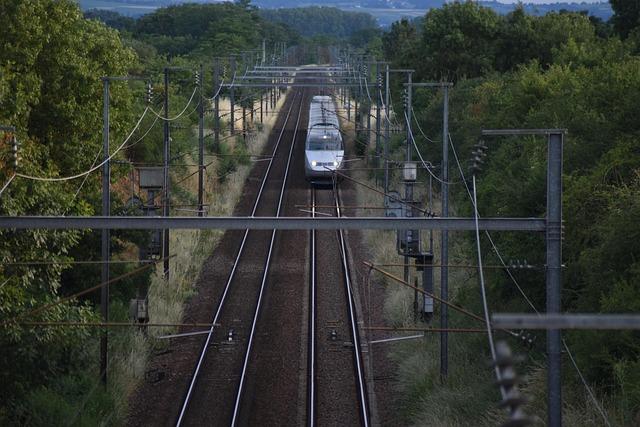
How France Beat Britain at the High-Speed Train Game
In an era where speed and efficiency dictate the future of transportation, France has emerged as a formidable player in the high-speed train arena, leaving Britain in its wake. The battle of the railways is not merely a contest of track and technology; it reflects deep-seated differences in investment strategies, infrastructure development, and government commitment. As France continues to refine its TGV network and expand its reach across Europe, Britain grapples with delays and budget constraints in its own high-speed initiatives. This article delves into the factors driving France’s success, examining the lessons that Britain can glean from its continental rival’s approach to high-speed rail. From ambitious government projects to a robust rail culture, we explore how France has not only set the standard but is also reshaping the future of mass transit in the region.
The Strategic Investments Behind France’s High-Speed Train Success
France’s ascendancy in the high-speed train industry owes much to its strategic investments in infrastructure and technology. Over the decades, the French government allocated substantial funding to develop a rail network that connects major cities efficiently, prioritizing speed, safety, and comfort. This vision was crystallized in the establishment of SNCF (Société Nationale des Chemins de fer Français), which has spearheaded the technological advancements essential for the TGV (Train à Grande Vitesse). The TGV not only redefined rail travel in France but also inspired similar systems across the globe. Key investments included:
- Development of dedicated high-speed rail lines
- Investment in cutting-edge train technology
- Continuous rail infrastructure upgrades
The government’s commitment to sustainable transport solutions further amplified France’s competitive edge. Intensive research and collaboration with private enterprises allowed for innovation that enhanced the efficiency of the TGV, which operates at speeds reaching up to 320 km/h (199 mph). France also benefited from a planning philosophy that anticipates future needs, ensuring the longevity of its rail system. A table below illustrates the investment trends that have propelled France’s high-speed rail success:
| Year | Investment (Billion €) | Key Developments |
|---|---|---|
| 1981 | 1.2 | Launch of TGV services |
| 1997 | 1.5 | Extension to Eurostar |
| 2015 | 2.0 | Modernization of existing lines |
Technological Innovations: How France Revolutionized Rail Travel
France’s foray into high-speed rail travel began with the inauguration of the TGV (Train à Grande Vitesse) in 1981, marking a pivotal moment that transformed not just national but international travel dynamics. The TGV, capable of reaching speeds up to 300 km/h (186 mph), was a groundbreaking achievement in railway engineering, driven by innovation and state investment. Key elements contributing to this revolution included:
- Dedicated High-Speed Tracks: Unlike conventional rail systems, the TGV operates on specially designed tracks, minimizing delays and interruptions.
- Advanced Aerodynamics: The train’s sleek design reduces air resistance, enhancing speed and fuel efficiency.
- Cutting-Edge Signaling Systems: Innovations in communication and signaling technology ensure safety while maintaining high operational speeds.
Moreover, the socio-economic impact of the high-speed rail network has been substantial. By connecting major urban centers such as Paris, Lyon, and Marseille, the TGV has fostered increased accessibility, driving regional economic growth. The following table illustrates some essential statistics and milestones associated with France’s high-speed rail services:
| Year | Milestone | Impact |
|---|---|---|
| 1981 | Launch of TGV | Introduced high-speed travel in France |
| 1990 | First International Route | Connected France with Switzerland |
| 2007 | Record Speed | TGV holds the world record at 574.8 km/h |
Regulatory Frameworks: Lessons from France for Britain’s Rail System
The French rail system’s success, particularly with the TGV, offers crucial insights for Britain’s railways. One standout feature is France’s centralized regulatory framework, which streamlines decision-making and enhances operational efficiency. By operating under a unified authority, France has effectively tackled challenges such as infrastructure investment and service consistency, leading to a robust high-speed network. In contrast, Britain’s fragmented model complicates coordination among various operators, resulting in inconsistent service and rising costs.
In addition to centralized governance, France implements rigorous standards for safety and performance. This commitment ensures that every aspect of rail travel, from construction to customer service, meets high expectations. The country also prioritizes public-private partnerships, leveraging private investment to expand and modernize services without placing undue financial burden on taxpayers. By examining these strategies, Britain can explore more cohesive regulatory approaches that not only enhance operational efficiency but also provide passengers with a reliable and secure travel experience.
Future Prospects: Recommendations for Enhancing Britain’s High-Speed Network
To reclaim its place at the forefront of high-speed rail, Britain must embrace a multi-faceted strategy that prioritizes investment, infrastructure, and innovation. This can be achieved through:
- Increased Funding: The government should allocate substantial resources to high-speed rail projects, ensuring competitive financing to stimulate growth.
- Public-Private Partnerships: Engaging private investment will enhance expertise and expedite project delivery, allowing for shared risk and improved efficiency.
- Technological Integration: Embracing cutting-edge technology, such as automated trains and AI-driven scheduling, will optimize service reliability and passenger experience.
Furthermore, there is a pressing need to modernize existing rail infrastructure and enhance connectivity between major cities. Key recommendations include:
| Actions | Benefits |
|---|---|
| Upgrade current rail lines | Increased speeds and reduced travel times |
| Expand network to underserved regions | Enhanced regional economic development |
| Focus on sustainability initiatives | Improved environmental impact and public image |
The Way Forward
In conclusion, France’s triumph over Britain in the high-speed train arena underscores a pivotal shift in European transportation dynamics. While the UK grappled with delays and budget overruns, France pursued a visionary approach, investing heavily in infrastructure and innovation. The implications of this victory extend beyond mere travel efficiency; they reflect broader themes of national competitiveness, technological advancement, and the future of public transport across the continent. As nations examine the lessons from this rivalry, the focus will inevitably turn to how they can adapt and innovate in an ever-evolving landscape. With sustainability and connectivity at the forefront, the stakes are high, and the race is far from over.