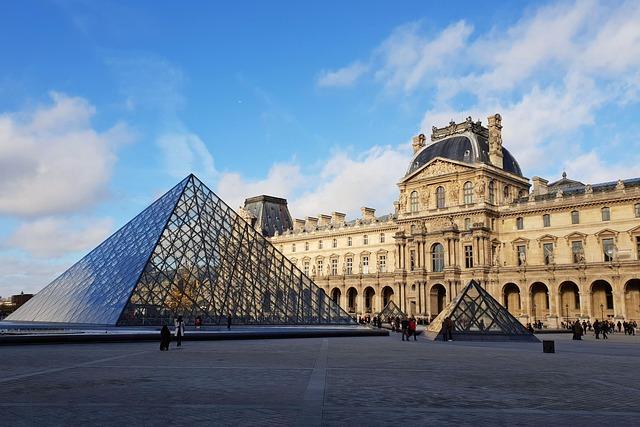
Two suspects linked to the high-profile heist at the Louvre Museum have partially admitted their involvement, Paris prosecutors revealed on Tuesday. The admission comes amid an ongoing investigation into the daring theft that shook France’s cultural capital, raising questions about the security measures at one of the world’s most renowned art institutions. Authorities are continuing to piece together the extent of the suspects’ roles as the case unfolds.
Two Suspects Partially Admit Role in Louvre Heist Explains Paris Prosecutor
Two individuals linked to the audacious Louvre Museum heist have confessed to partial involvement, according to statements from the Paris prosecutor’s office. During interrogation, both suspects provided limited admissions that confirm their presence and minor roles during the execution of the crime, though they have stopped short of disclosing full details about the planning or execution. Authorities continue to emphasize the complexity of the investigation, seeking to uncover the full network behind the heist.
The prosecutor highlighted several key aspects emerging from the suspects’ testimonies:
- One suspect admitted to assisting with surveillance outside the museum but denied direct participation in the theft.
- The second suspect acknowledged involvement in the preparation phase, including securing logistics.
- Both denied any violent intention or direct handling of the stolen artifacts.
| Suspect | Partial Admission | Remaining Questions |
|---|---|---|
| Suspect A | Exterior surveillance | Identity of coordinators |
| Suspect B | Logistics management | Exact role in theft |
Investigation Reveals Complex Network Behind High-Profile Art Theft
Authorities in Paris have disclosed that two individuals apprehended in connection with the notorious Louvre art theft have offered partial confessions, shedding light on an intricate web of accomplices spanning multiple countries. Investigators highlighted that the suspects’ admissions point to a carefully coordinated operation, orchestrated by a network with diverse expertise ranging from high-level planning to illicit art trafficking. Officials emphasize that while the suspects revealed involvement, key masterminds in the heist remain at large, indicating the theft’s complexity surpasses initial assessments.
The ongoing investigation has uncovered several critical facets of the criminal enterprise, including:
- International Collaboration: Links to underground auctions and intermediaries across Europe and the Middle East.
- Advanced Surveillance Avoidance: Use of encrypted communications and decoy operations to mislead law enforcement.
- Specialized Roles: Distinct tasks assigned to members, such as logistics coordination, art authentication, and fencing stolen items.
A brief breakdown of the suspects’ known roles is detailed in the table below:
| Name | Role | Status |
|---|---|---|
| Suspect A | Logistics Coordinator | Partial Confession |
| Suspect B | Lookout and Messenger | Partial Confession |
| Unidentified | Mastermind/Financier | At Large |
Authorities Strengthen Security Measures at Major Cultural Institutions
In the wake of the Louvre heist, authorities have intensified security protocols across key cultural landmarks. Enhanced surveillance technologies, including facial recognition and AI-driven monitoring systems, have been deployed to deter future criminal activities. Collaborations with local law enforcement and private security firms have been expanded, ensuring a round-the-clock presence around museums, galleries, and heritage sites.
Key aspects of the security upgrades include:
- Installation of advanced motion sensors and infrared cameras
- Implementation of rigorous background checks for museum staff and contractors
- Regular security drills and emergency response evaluations
- Improved access control systems with biometric screening
- Heightened cooperation with international art theft databases
| Security Feature | Implementation Status | Expected Impact |
|---|---|---|
| Facial recognition entry | Active in 5 major museums | Enhances visitor screening |
| AI monitoring systems | Under trial at Louvre | Real-time threat detection |
| Biometric access control | Being installed | Limits unauthorized access |
Experts Recommend Enhanced Surveillance and International Cooperation to Prevent Future Heists
Security experts underscore the critical need for a multi-layered approach to safeguard world-renowned cultural institutions. Enhanced surveillance technology, including AI-powered facial recognition and real-time behavioral analysis, is increasingly seen as essential in deterring and swiftly responding to high-profile thefts. Furthermore, fostering robust international cooperation is paramount, as stolen artifacts often traverse borders rapidly, complicating recovery efforts.
Leading analysts recommend the following strategic measures:
- Integrated intelligence sharing networks among global law enforcement agencies to monitor and track illicit art trade.
- Joint training programs for museum security personnel to handle evolving threat scenarios.
- Implementation of advanced artifact tracking systems to identify and authenticate works in real time.
- Diplomatic frameworks to streamline cross-border investigations and legal actions.
| Measure | Purpose | Expected Outcome |
|---|---|---|
| AI-Powered Surveillance | Detect suspicious behavior instantly | Reduced response time |
| International Intelligence Sharing | Track stolen artifacts globally | Higher recovery rates |
| Training Programs | Enhance security skills | Proactive threat management |
| Diplomatic Frameworks | Facilitate cross-border legal action | Streamlined prosecutions |
Future Outlook
As the investigation into the Louvre heist continues, the partial admissions by the two suspects mark a significant development in the case. Paris authorities remain focused on uncovering the full extent of the crime and any potential accomplices involved. Further updates are expected as the judicial process unfolds, shedding more light on one of the most audacious art thefts in recent history.