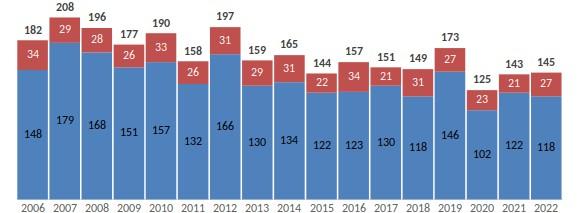
Recent reports on the surge in violent crime across France have sparked widespread debate and speculation about underlying causes. However, a detailed analysis by the Middle East Monitor challenges prevalent narratives that link rising violence to Muslim headscarves or broader religious practices. This article examines the complexities behind France’s escalating crime rates, highlighting how the issue is far more nuanced than commonly portrayed in public discourse.
Violent Crime Surge in France Analyzing Root Causes Beyond Religious Symbolism
Recent spikes in violent crime across urban France warrant a nuanced examination beyond simplistic cultural or religious narratives. Despite media focus on Muslim headscarves as symbols purportedly linked to unrest, comprehensive analysis points to more complex socio-economic drivers. Key factors include rising youth unemployment, systemic poverty in marginalized neighborhoods, and fractured social cohesion, which collectively incubate environments where crime escalates. Importantly, these issues cut across religious and ethnic lines, highlighting broader societal challenges rather than Islamist symbolism.
Root causes identified by experts include:
- High rates of unemployment particularly among young adults aged 18-25
- Inadequate educational resources and school dropout rates
- Concentration of disadvantaged communities in urban peripheries
- Limited access to social services and community policing efforts
| Factor | Impact on Crime Rates | Geographic Hotspots |
|---|---|---|
| Youth Unemployment | Increases propensity for criminal activity | Banlieues of Paris, Marseille |
| Educational Deficits | Limits job opportunities post-school | Seine-Saint-Denis, Lyon suburbs |
| Social Exclusion | Fuels resentment and gang affiliation | Major metropolitan outskirts |
Separating Fact from Fiction The Misconceptions Surrounding Muslim Headscarves and Crime
Despite persistent narratives in some media outlets, there is no credible evidence linking the presence of Muslim headscarves, or hijabs, to any increase in violent crime in France. The rise in violent incidents is a complex issue influenced by socioeconomic factors, urban policies, and law enforcement challenges—none of which correlate with religious attire. Stereotyping entire communities based on visible religious symbols only serves to deepen divisions and distract from real solutions. Data collected by French law enforcement agencies consistently shows that crime rates fluctuate independently of religious dress, proving that misconceptions are often driven by bias, not fact.
- Socioeconomic hardship: High unemployment and poverty play a far greater role in crime trends than religious identity.
- Urban disenfranchisement: Many affected areas face long-standing neglect, contributing to tension and violence.
- Misplaced scapegoating: Muslim women who wear headscarves have repeatedly been unfairly targeted in public discourse.
| Factor | Impact on Violent Crime |
|---|---|
| Unemployment Rate | Significant |
| Religious Dress | None |
| Access to Education | Moderate |
| Urban Policy | High |
Socioeconomic and Political Factors Driving France’s Crime Wave
The surge in violent crime across France cannot be simplistically attributed to cultural or religious symbols such as Muslim headscarves. Rather, this complex phenomenon is deeply rooted in broader socioeconomic disparities and systemic political neglect. High unemployment rates, especially among youth in marginalized urban areas, have created fertile ground for criminal activity to flourish. The lack of adequate investment in education, social services, and community infrastructure exacerbates feelings of disenfranchisement and alienation, fueling cycles of violence beyond simplistic cultural explanations.
Meanwhile, political policies aimed at addressing these issues have often been fragmented or punitive rather than preventive. Law enforcement strategies that focus heavily on control instead of community engagement have failed to rebuild trust between authorities and vulnerable populations. The following table outlines key socioeconomic indicators in regions most affected by violent crime compared to national averages:
| Indicator | High Crime Regions | National Average |
|---|---|---|
| Unemployment Rate | 19.5% | 8.7% |
| Youth (15-24) Unemployment | 32.3% | 17.4% |
| Median Household Income (€) | 21,000 | 28,500 |
| School Dropout Rate | 14.2% | 8.5% |
Addressing the root causes requires a multi-dimensional approach:
- Targeted economic revitalization and job creation programs in affected neighborhoods
- Investment in education to reduce dropout rates and improve long-term prospects
- Community policing models to strengthen trust and cooperation between citizens and law enforcement
- Policies aimed at reducing social inequality and promoting integration
Policy Recommendations Addressing Violence Without Targeting Minority Communities
Effective strategies to combat violent crime must prioritize social and economic reforms rather than scapegoating minority communities. Policies should focus on improving educational opportunities, expanding access to mental health services, and fostering community-based policing initiatives that build trust without discrimination. Investing in youth programs and job creation in high-risk areas can address the root causes of violence more constructively than indiscriminate law enforcement practices.
Additionally, transparency and accountability mechanisms are essential to ensure that crime prevention efforts do not reinforce systemic biases. Key recommendations include:
- Community engagement: Establish forums where local residents and police collaboratively address safety concerns.
- Data-driven policing: Utilize objective crime data to allocate resources efficiently without ethnic profiling.
- Legal safeguards: Protect minority rights by enforcing strict penalties against racial profiling and hate crimes.
| Policy Area | Key Actions | Expected Outcome |
|---|---|---|
| Education & Youth | After-school programs, vocational training | Reduced gang involvement |
| Mental Health | Accessible counseling, crisis interventions | Lower recidivism rates |
| Policing Reform | Bias training, community patrols | Enhanced public trust |
Concluding Remarks
In conclusion, while violent crime in France presents a serious challenge for public safety and social cohesion, attributing this issue to Muslim headscarves is both misleading and unsubstantiated. Experts and official data emphasize that crime trends are influenced by a complex interplay of socioeconomic factors rather than cultural or religious attire. As the debate continues, it remains crucial for policymakers and media alike to focus on evidence-based analysis and inclusive dialogue that address the root causes of violence without resorting to divisive stereotypes.