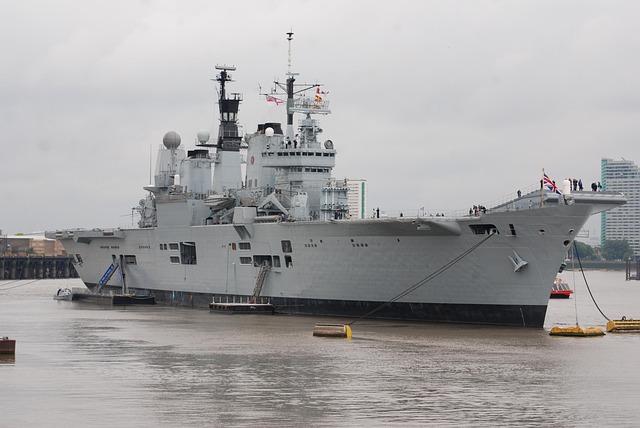
In a significant boost to its naval capabilities, French President Emmanuel Macron has officially named the country’s next flagship aircraft carrier “Free France.” The announcement, made during a ceremony at the naval dockyard in Brest, underscores France’s commitment to strengthening its maritime defense amid growing global geopolitical tensions. As one of the largest and most advanced vessels of its kind, the carrier is set to play a crucial role in France’s military strategy, symbolizing both national pride and a renewed focus on international cooperation in maritime security. This article delves into the implications of this ambitious project for France’s naval future, the broader context of European defense, and the aspirations that “Free France” represents for the nation and its allies.
Macron Unveils Strategic Vision with New Aircraft Carrier Free France
French President Emmanuel Macron has officially unveiled the name and strategic intention behind the next flagship aircraft carrier, dubbed “Free France.” Set to be a cornerstone of the nation’s maritime defense, this vessel highlights France’s commitment to enhancing its naval capabilities in an increasingly competitive global landscape. The announcement reflects a broader strategy to reaffirm France’s position as a key player in international security, with a focus on projecting power and maintaining freedom of navigation in contested waters.
The “Free France” aircraft carrier will not only serve as a formidable addition to the French Navy but is also envisioned as a symbol of national resilience and pride. Key features of the vessel include:
- Advanced Technology: Equipped with state-of-the-art avionics and weaponry for modern warfare.
- Multinational Collaboration: Designed to facilitate joint operations with NATO allies and other international partners.
- Environmental Initiatives: Incorporating sustainable practices in construction and operation to minimize ecological impact.
| Feature | Description |
|---|---|
| Displacement | More than 70,000 tons |
| Aircraft Capacity | Up to 40 aircraft, including drones |
| Launch Capability | Catapult-assisted takeoff |
Macron’s vision for “Free France” goes beyond mere military might; it emphasizes a narrative of empowerment and freedom, recalling the storied history of France’s naval prowess. By investing in this carrier, France aims not only to safeguard its interests but also to contribute to global peacekeeping efforts, ensuring that international waters remain open and secure for all nations.
Implications for France’s Naval Power and Global Military Presence
The announcement of the next flagship aircraft carrier being named ‘Free France’ represents a bold reinforcement of France’s military ambitions on both national and global fronts. This modern vessel is poised to enhance naval capabilities significantly, supporting France’s strategic interests in key maritime regions. With an emphasis on advanced technologies and enhanced operational capacity, the carrier will not only serve as a multi-role combat platform but also a symbol of France’s enduring commitment to sovereignty and security in a rapidly changing geopolitical landscape. The implications for France’s naval power may include:
- Increased Naval Presence: Enhanced ability to project force and conduct operations in contested environments.
- Strategic Alliances: Strengthening partnerships with NATO allies and enhancing collaborative defense efforts.
- Trade Security: Better protection of vital trade routes in the face of global maritime threats.
Furthermore, the ‘Free France’ will likely play a pivotal role in defining France’s global military presence, affirming its status as a leading maritime power. By investing in cutting-edge naval technology and capabilities, France aims to navigate political challenges more effectively while advocating for European security initiatives. This fleet expansion not only signifies a commitment to national defense but also underscores France’s role as a stabilizing force on the international stage. The potential outcomes may include:
- Enhanced Diplomacy: Utilization of naval operations to bolster diplomatic engagements worldwide.
- Regional Influence: Increased influence in the Mediterranean, West Africa, and Indo-Pacific regions.
- Capacity Building: Opportunities for joint exercises and training with allied nations, expanding collective defense frameworks.
| Categories | Description | Impact |
|---|---|---|
| Naval Operations | Increased fleet mobility and versatility. | Greater maritime security. |
| Diplomatic Defense | Strengthening ties with allies through joint operations. | Enhanced international cooperation. |
| Regional Stability | Active patrolling and engagement in strategic waters. | Reduction of maritime disputes. |
Technological Innovations Set to Enhance Operational Capabilities
The future of naval power is being redefined as France unveils its latest aircraft carrier, the ‘Free France’. Aimed at bolstering the capabilities of the French Navy, this new flagship incorporates cutting-edge technological advancements that promise to enhance operational efficiency and strategic flexibility. The vessel is equipped with state-of-the-art radar systems, sophisticated electronic warfare capabilities, and advanced launch systems for unmanned aerial vehicles (UAVs). These innovations not only amplify the carrier’s defense mechanisms but also enable it to project power more effectively across various maritime domains.
Furthermore, the ‘Free France’ features a hybrid propulsion system designed to optimize fuel consumption while minimizing its environmental impact. This carrier’s ability to utilize renewable energy sources marks a significant step towards sustainable naval operations. The integration of AI-driven combat management systems allows for quicker decision-making processes and improved situational awareness. Features like these underscore a shift in military paradigms, emphasizing the importance of adaptability in complex operational environments.
| Features | Benefits |
|---|---|
| Hybrid Propulsion System | Optimizes fuel efficiency and reduces emissions |
| Advanced Radar Systems | Enhances aerial surveillance and threat detection |
| AI Combat Management | Improves decision-making and situational awareness |
| UAV Launch Systems | Extends operational reach and versatility |
Recommendations for Strengthening International Naval Partnerships
As the naming of the next flagship aircraft carrier ‘Free France’ underscores the importance of naval power, it is imperative for nations to enhance their collaborative relationships in maritime defense. Strengthening international naval partnerships can facilitate a shared vision for security that transcends borders. Key strategies include:
- Joint Training Exercises: Regular exercises can help develop interoperability among allied navies, fostering familiarity with each other’s operational procedures.
- Information Sharing Initiatives: Establishing robust communication and intelligence-sharing platforms can enhance situational awareness and collective decision-making in maritime operations.
- Collaborative Research and Development: Nations can pool their resources for innovative technologies that bolster naval capabilities against emerging threats.
- Strategic Diplomatic Engagements: Regular diplomatic dialogues focused on regional maritime security can build trust and strengthen alliances.
The investment in international partnerships is not merely beneficial; it is essential in facing evolving global threats. One practical approach is the establishment of a Naval Cooperation Framework, which could include:
| Aspect | Proposed Action |
|---|---|
| Capacity Building | Training programs for emerging navies |
| Joint Operations | Coordinated maritime patrols |
| Resource Sharing | Shared use of port facilities |
| Emergency Response | Collaborative crisis management frameworks |
Key Takeaways
In a move that underscores France’s commitment to naval supremacy and its historical legacy, President Emmanuel Macron has officially named the nation’s next flagship aircraft carrier ‘Free France.’ This announcement, made in a ceremony at the naval base in Toulon, not only reflects France’s dedication to modern defense capabilities but also pays homage to the resilience and spirit of the French Resistance during World War II. As the new carrier is set to be a cornerstone of France’s maritime strategy, it also symbolizes a renewed focus on international collaboration and security in an increasingly complex geopolitical landscape. With advanced technology and enhanced operational capabilities, the ‘Free France’ is poised to play a crucial role in ensuring national security and fulfilling France’s commitments to NATO and allied forces. As the nation embarks on this new chapter in its maritime history, the legacy of ‘Free France’ serves as a powerful reminder of the enduring values that shape the nation’s identity on the global stage.