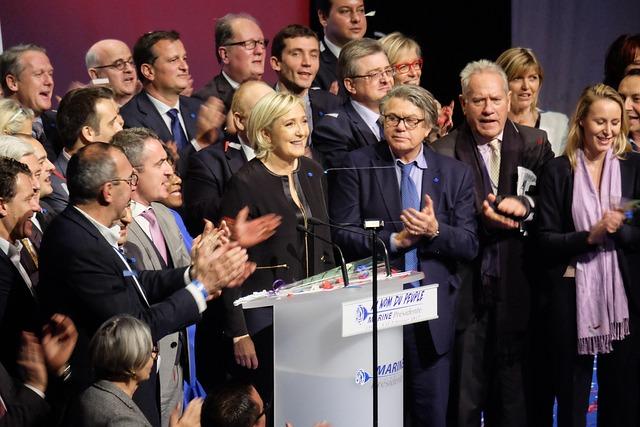
As France heads to the polls in a critical election, the stark divisions over poverty and education are emerging as defining fault lines in the political landscape. Voters are increasingly rallying around parties and candidates whose platforms address economic hardship and access to quality schooling, underscoring deep societal inequalities that continue to shape the nation’s future. This election, closely watched both domestically and internationally, highlights how issues of poverty and education are not only central to policy debates but are also pivotal in determining the balance of power in French politics.
Poverty and Education Shape Voter Divides in French Election
Economic hardship continues to play a defining role in the political landscape of France as voters from lower-income brackets show a pronounced shift toward candidates promising radical change. These voters often prioritize issues like social welfare, job security, and affordable housing, which dominate their electoral decisions. In contrast, more affluent citizens tend to support candidates with policies geared toward economic stability and international cooperation, reflecting a divide that runs deeply along socioeconomic lines.
Education levels also significantly influence voter behavior, with distinct preferences emerging between those with higher education and those without. Voters possessing advanced degrees generally lean toward traditional centrist or progressive parties that emphasize innovation, climate policy, and European integration. Meanwhile, individuals with lower educational attainment are more likely to back populist and nationalist movements, seeking immediate solutions to unemployment and immigration concerns. This polarization underscores a broader tension shaping the national debate.
- Low-income voters: Prioritize social welfare and job creation
- High-income voters: Favor economic stability and global alliances
- Highly educated voters: Support centrist and progressive parties
- Less educated voters: Align with populist and nationalist platforms
| Voter Group | Preferred Issues | Political Leaning |
|---|---|---|
| Low-income | Jobs, Welfare, Housing | Populist/Nationalist |
| High-income | Economy, Global Relations | Centrist/Right |
| Highly Educated | Climate, Innovation | Centrist/Left |
| Less Educated | Immigration, Security | Populist/Nationalist |
Economic Inequality Fuels Political Polarization Across Regions
Across France, the stark disparities in economic conditions have become a catalyst for deepening political divides. Regions marked by persistent poverty and lower educational attainment increasingly rally behind parties promising radical change, contrasting sharply with more affluent, well-educated urban centers favoring moderate or progressive platforms. This dynamic not only shapes the electoral map but also intensifies debates on national identity, social welfare, and economic reform, revealing a nation grappling with the consequences of uneven development.
A closer look at the voting patterns reveals key factors driving this polarization:
- Income inequality: Areas with higher unemployment and lower median incomes show a stronger inclination toward populist candidates.
- Education levels: Voters with limited access to higher education tend to support anti-establishment narratives more fervently.
- Urban vs. rural divide: Urban hubs with diverse economies and greater educational opportunities exhibit more centrist voting behaviors compared to rural locales.
| Region | Median Income (€) | Higher Education Rate (%) | Dominant Political Leaning |
|---|---|---|---|
| Nord-Pas-de-Calais | 18,500 | 23 | Far-Right |
| Île-de-France | 34,000 | 46 | Centrist |
| Occitanie | 19,700 | 28 | Left-leaning |
| Bretagne | 22,500 | 33 | Moderate |
Education Reform Emerges as Central Issue for Underserved Communities
Addressing the persistent disparities in education has become a pivotal concern as candidates vie for support among France’s underserved populations. Many communities, especially those grappling with poverty, are calling for a comprehensive overhaul that prioritizes equal access to quality schooling, modernized curricula, and enhanced teacher training. Advocates emphasize that reform is not just about infrastructure investment but tackling systemic inequities that leave disadvantaged youth behind, limiting their future prospects and perpetuating cycles of deprivation.
Key demands from these communities include:
- Increased funding for schools in low-income neighborhoods
- Greater support for bilingual and multicultural education programs
- Implementation of early intervention and after-school tutoring initiatives
- Policies to reduce student-to-teacher ratios for personalized learning
| Challenge | Proposed Solution | Expected Outcome |
|---|---|---|
| Poor school infrastructure | Nationwide renovation grants | Safer, more conducive learning environments |
| High dropout rates | Mentorship and engagement programs | Increased graduation percentages |
| Lack of qualified staff | Incentives for teacher recruitment | Improved teaching quality |
Policy Recommendations Focus on Bridging Socioeconomic Gaps
To address the growing divide, policymakers emphasize initiatives aimed at narrowing the economic and educational chasms that are increasingly shaping political dynamics in France. Key proposals include expanding access to quality education in underprivileged areas, incentivizing local job creation, and enhancing social welfare systems to uplift vulnerable populations. These measures seek to tackle systemic barriers that have long perpetuated inequality and fostered political disenfranchisement among marginalized groups.
Experts advocate a multi-faceted approach, combining immediate relief with long-term structural reforms to create sustainable opportunities. Among the suggested strategies are:
- Targeted vocational training to equip unemployed youth with market-relevant skills.
- Progressive taxation policies aimed at redistributing wealth more fairly.
- Improved public transportation links to connect isolated communities with economic hubs.
- Digital inclusion programs ensuring equal access to technology and online resources.
| Policy Area | Current Gap | Proposed Impact |
|---|---|---|
| Education | 25% lower graduation rates | Increase graduation rates by 15% |
| Employment | Unemployment 2x national average | Reduce unemployment by 30% |
| Income Inequality | Top 10% hold 60% wealth | Redistribute wealth by 10% |
Key Takeaways
As the French electorate heads to the polls, the stark divide between socio-economic classes and educational attainment remains a defining feature of the campaign. Poverty and access to education are not just background issues but central battlegrounds shaping voter loyalties and party platforms. How candidates address these deep-rooted inequalities will likely influence both the election outcome and France’s social fabric for years to come. Observers will be watching closely to see if promises translate into policies that can bridge these divides or if the fault lines exposed by this election deepen further.