For over a century, France has waged a determined campaign to uphold secularism in its public schools by regulating religious symbols worn by students. From the high-profile ban on crucifixes in classrooms to recent restrictions on Islamic veils such as the abaya, these measures reflect the country’s ongoing struggle to balance freedom of expression with its staunch commitment to laïcité—a principle separating religion from the state. This article traces the evolution of France’s controversial policies, examining their social and political implications in a nation deeply divided over the role of religion in the public sphere.
France’s Historical Battle Over Religious Symbols in Education
Since the early 20th century, France has grappled with the role of religious symbols in its secular public education system, sparking debates that reflect broader tensions about identity and integration. The controversy initially focused on the visible presence of crucifixes in classrooms, symbolizing Catholicism’s deep-rooted influence. This led to pivotal legislation in 1905 establishing laïcité (secularism) as a cornerstone of French public life, mandating the strict separation of church and state. Over the decades, these principles evolved, being challenged and reinterpreted as France became increasingly diverse.
In recent years, the focus shifted towards Islamic symbols, most notably the abaya and hijab, which ignited heated debates over religious freedom versus secular uniformity. Laws passed in the early 2000s banned conspicuous religious attire, underscoring France’s commitment to neutrality but also drawing criticism from human rights groups. Key points in this ongoing battle include:
- 1905 Law on Separation of Churches and State: Foundation of secularism in public institutions;
- 2004 Law: Prohibiting conspicuous religious symbols in public schools;
- 2010 Ban on Face Coverings: Extending to public spaces, affecting niqab and burqa;
- Ongoing Debates: Balancing secularism with religious freedom in a multicultural society.
| Year | Legislation | Focus |
|---|---|---|
| 1905 | Separation of Churches and State | Neutrality in public institutions |
| 2004 | Religious Symbols Ban | Crucifixes, hijabs in schools |
| 2010 | Face Covering Ban | Niqab and burqa in public spaces |
The Evolution of Secularism and Its Impact on School Policy
Over the past century, France has navigated a complex path to define the boundaries between religion and education, a journey deeply rooted in its commitment to laïcité, the principle of secularism. Originally, this battle was symbolized by the prohibition of the crucifix in classrooms, reflecting a broader state effort to preserve a neutral educational environment. Fast forward to the 21st century, debates have expanded to encompass diverse religious symbols, including the controversial bans on Islamic headscarves such as the abaya and hijab. These policy changes underscore an ongoing attempt to reconcile religious freedom with the secularist ideals that fuel the national identity.
The evolution of these policies can be summarized through key moments and their impact on school regulation:
- 1905: Law on the Separation of Church and State, institutionalizing secularism in public institutions.
- 1984: First ban on conspicuous religious symbols in public schools, primarily targeting crosses, yarmulkes, and turbans.
- 2004: Comprehensive ban on all conspicuous religious symbols in public schools, formalizing the secular stance.
- 2010: Prohibition of full-face veils in public spaces, indirectly affecting school attendance.
This continuum has left a profound imprint on educational settings, shaping curricula and school climate. Administrations have had to balance the rights of individual expression with the collective demand for adherence to secular values, making French schools a frontline battleground for social and cultural cohesion.
| Year | Policy | Symbol Targeted |
|---|---|---|
| 1905 | Separation of Church and State | All religious symbols in government institutions |
| 1984 | Ban on conspicuous symbols in schools | Crucifix, kippah, turban |
| 2004 | Expanded symbol ban | Headscarves, large crosses, other visible symbols |
| 2010 | Full-face veil ban | Niqab, burqa |
Social and Political Repercussions of Banning Religious Attire
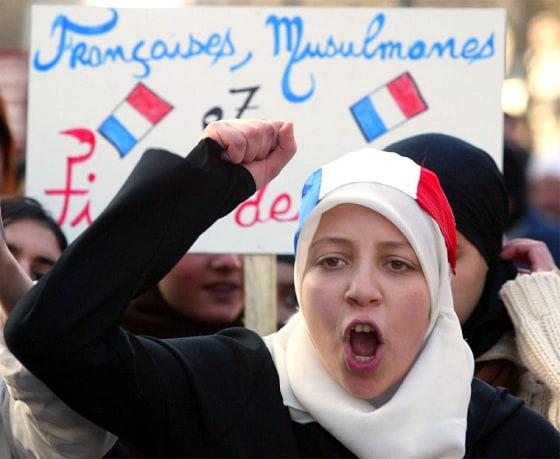
France’s persistent stance on banning religious attire in public schools has ignited intense social and political debates, reflecting deep-rooted tensions over secularism and multiculturalism. Critics argue that these policies unfairly target Muslim communities, contributing to marginalization and social exclusion. Proponents, however, maintain that the measures uphold the country’s foundational value of laïcité, ensuring neutrality in educational spaces. The social fabric is strained as young students find themselves at the intersection of identity conflicts, with some facing alienation while others view the ban as a necessary step towards integration.
The political repercussions extend far beyond the classroom walls. Several political parties have leveraged the controversy to galvanize support, often framing the debate through the lens of national identity and security. Legislative attempts to expand or tighten these bans have stirred fierce parliamentary battles. Below is a concise overview of the political positioning on religious attire bans:
| Political Party | Position on Ban | Rhetorical Focus |
|---|---|---|
| Republican Right | Supportive | Secularism & National Unity |
| Left-wing Coalitions | Opposed | Religious Freedom & Social Inclusion |
| Far-right Groups | Strongly Supportive | Immigration Control & Security |
| Centrist Parties | Mixed | Balance of Rights & Public Order |
- Educational impacts: Students experience identity conflicts and reduced participation.
- Community reactions: Protests, advocacy campaigns, and interfaith dialogues intensify.
- International response: The bans provoke criticism from human rights organizations.
Balancing Freedom of Expression and Secular Values in French Schools
The French education system stands at a complex crossroads where freedom of expression meets the country’s deeply rooted commitment to secularism. This balance has been fiercely contested for over a century, reflecting broader societal tensions about the place of religion in public life. French schools have been battlegrounds for symbolic conflicts, from the display of crucifixes in classrooms in the early 20th century to more recent debates over Islamic attire such as the abaya. The government maintains that prohibiting conspicuous religious symbols safeguards equality and fosters a neutral public space, a principle enshrined in the 1905 law on the separation of church and state.
However, critics argue that these measures risk infringing on individual rights and stigmatizing minority communities. The challenge lies in crafting policies that:
- Protect students’ rights to express their identities
- Preserve the secular ethos vital to France’s republican values
- Prevent communal tensions within diverse classrooms
As France navigates this delicate dilemma, the ongoing dialogue reveals much about the evolving definition of citizenship and the limits of tolerance in a pluralistic society.
Future Outlook
As France continues to navigate the complex balance between secularism and religious expression, its century-long efforts to regulate religious symbols in schools remain a potent reflection of the nation’s commitment to laïcité. From the removal of crucifixes to recent debates over the abaya, these measures underscore the enduring tensions between individual freedoms and the French Republic’s foundational principles. The ongoing discourse highlights not only the challenges of integration in a multicultural society but also the evolving interpretations of secularism in a modern context.